

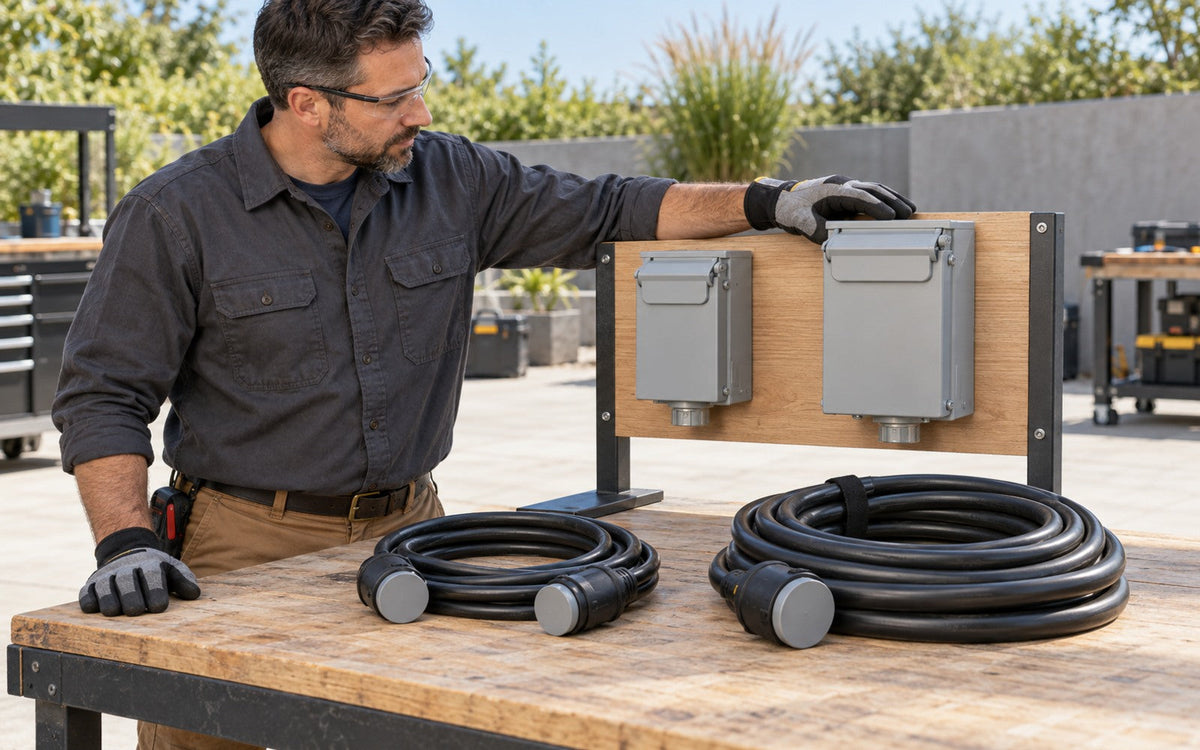
A 30 amp generator inlet box is usually the right fit when your essential backup loads stay within a 7,500-watt power budget. A 50 amp inlet box provides up to 12,500 watts of connection capacity for a larger generator and more simultaneous loads. The best choice is the one that matches your generator outlet, transfer equipment, and the actual running and starting wattage of the appliances you plan to use.
30 Amp vs. 50 Amp Inlet Boxes at a Glance
- 30 amp option: The NEMA L14-30 connection is rated 125/250 volts and up to 7,500 watts. It suits a carefully managed set of essential household loads.
- 50 amp option: The NEMA 14-50 generator connection and SS2-50 inlet setup are rated 125/250 volts and up to 12,500 watts. This gives a larger power budget for additional loads.
- What does not change: The generator's running-watt rating and each appliance's requirements still control what can operate safely. A higher-rated inlet does not create more generator power.
The wattage figures above describe connection capacity. Your usable output cannot exceed the generator's ratings, the branch-circuit limits, or any other component in the system.
Start With Your Backup-Power Load List
Before choosing an inlet box, list every appliance you want available during an outage. Read each appliance label or manual for its actual wattage and account for starting demand where applicable. The transcript's simple planning rule is:
Volts × amps = watts
Use that formula to understand a connection's theoretical maximum, then compare your appliance total with the generator's running-watt rating. Pumps, fans, refrigerators, freezers, and other motor-driven equipment may briefly draw more power at startup, so running watts alone may not tell the whole story.
For a broader checklist, review the AC WORKS® backup-power planning guide.
What a 30 Amp Inlet Box Can Support
The 30 amp example in the transcript uses an L14-30 inlet and matching generator cord. At 125/250 volts, the connection has a maximum capacity of 7,500 watts. To use that full capacity, the generator must have sufficient running output and a matching connection.
The transcript illustrates a possible essential-load plan with these approximate values:
- Refrigerator or freezer: up to 700 watts
- Sump pump: up to 1,000 watts
- Well pump: up to 1,000 watts
- Cooling or furnace fan example: about 1,200 watts
- Water heater example: up to 2,000 watts
- Microwave example: up to 1,000 watts or more
- Three 100-watt light bulbs: 300 watts
Together, those estimates reach about 7,200 watts. That is close to the 7,500-watt connection limit, so there is little room for variation or startup demand. Treat these numbers as examples only; actual appliances can differ significantly.
See the AC WORKS® L14-30 emergency power kit for the verified 30 amp configuration discussed here.
When a 50 Amp Inlet Box Makes More Sense
A 50 amp setup expands the connection capacity to 12,500 watts. In the transcript's example, that larger budget can accommodate the essential-load plan above plus selected additional loads, provided the generator can supply them.
Examples added in the transcript include:
- Television example: about 400 watts
- Electric stove example: about 2,000 watts
- Three additional 100-watt bulbs: 300 watts
- Fan or space-heater example: about 1,000 watts
The transcript's expanded example totals about 10,900 watts. That remains below the 12,500-watt connection capacity, but it would exceed a generator rated for only 10,000 running watts. The generator remains the limiting factor.
See the AC WORKS® 50 amp emergency power kit for the verified SS2-50 inlet and NEMA 14-50 generator-cord configuration.
How to Choose the Right Inlet Box
- List the appliances and systems you consider essential during an outage.
- Record each item's running watts and any stated starting watts.
- Add the loads that may run at the same time, including a reasonable margin for startup demand.
- Confirm the generator's running-watt rating and outlet configuration.
- Choose a 30 amp or 50 amp inlet system that matches the generator, transfer equipment, cable, and planned load.
If the 30 amp plan is already close to 7,500 watts, reducing simultaneous loads or selecting a properly matched 50 amp system may provide more practical capacity. If your essential loads stay comfortably below the 30 amp limit, the larger system may not be necessary.
Electrical Safety Comes First
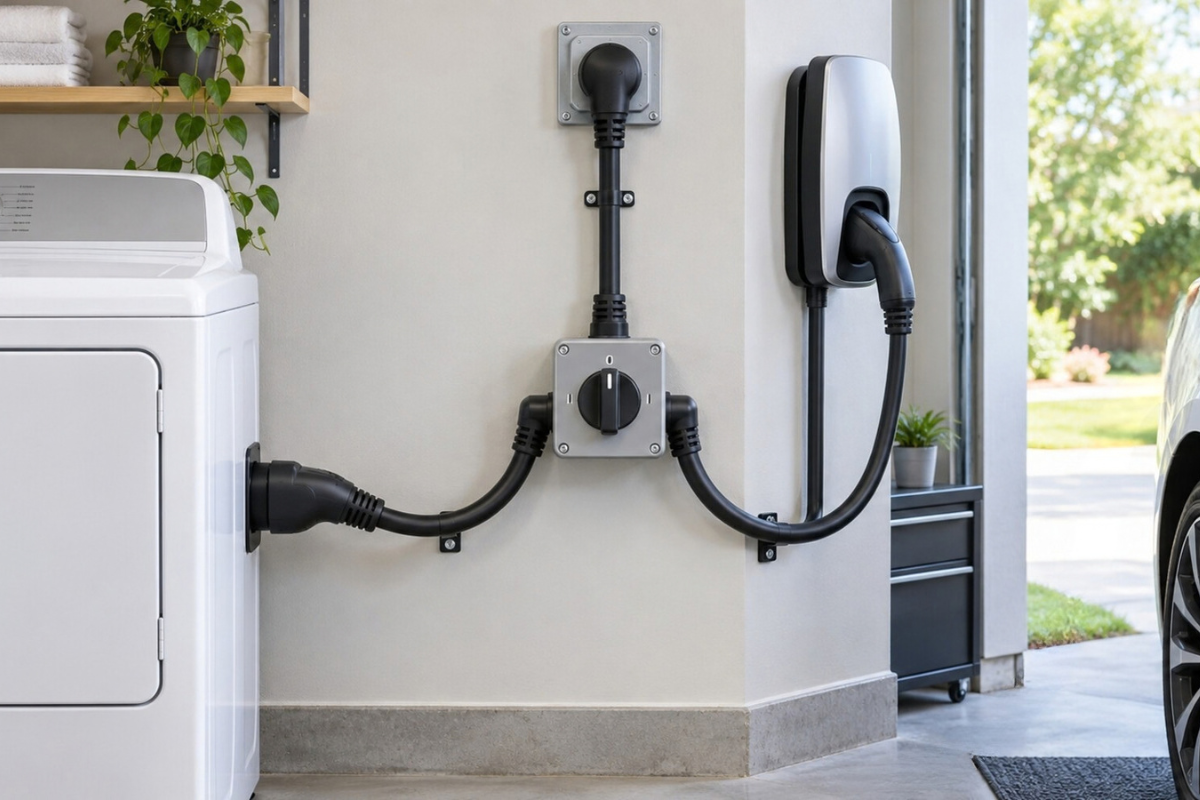
A home generator inlet must be used with properly installed transfer equipment so generator power cannot back-feed the utility system. Keep the generator outdoors and follow the generator manufacturer's placement and operating instructions. Never connect a generator to a home through an improvised cord or an ordinary receptacle.
Have a licensed electrician evaluate and install the inlet box, transfer switch or interlock, wiring, overcurrent protection, and grounding for your home. The electrician should also confirm that every component is compatible with your generator and intended loads.
Frequently Asked Questions
How many watts can a 30 amp generator inlet handle?
The L14-30 connection described in the transcript is rated 125/250 volts and has a maximum connection capacity of 7,500 watts. Actual usable power is limited by the generator and the rest of the installed system.
How many watts can a 50 amp generator inlet handle?
The 125/250-volt 50 amp setup described in the transcript has a maximum connection capacity of 12,500 watts. Your generator must be able to supply the loads you intend to run.
Does a 50 amp inlet make my generator more powerful?
No. An inlet only provides a connection path. The generator's running and starting ratings determine how much power is available.
Which appliances should I prioritize during an outage?
Start with essentials such as refrigeration, sump or well pumps, heating or cooling needs, limited lighting, and basic cooking. Use the actual ratings from your equipment rather than relying only on averages.
Who should install a generator inlet box?
A licensed electrician should install or evaluate the inlet, transfer equipment, wiring, grounding, and protection for a home backup-power system.

Share:
What Is RoHS? Understanding Hazardous Substance Restrictions in Electrical Products