


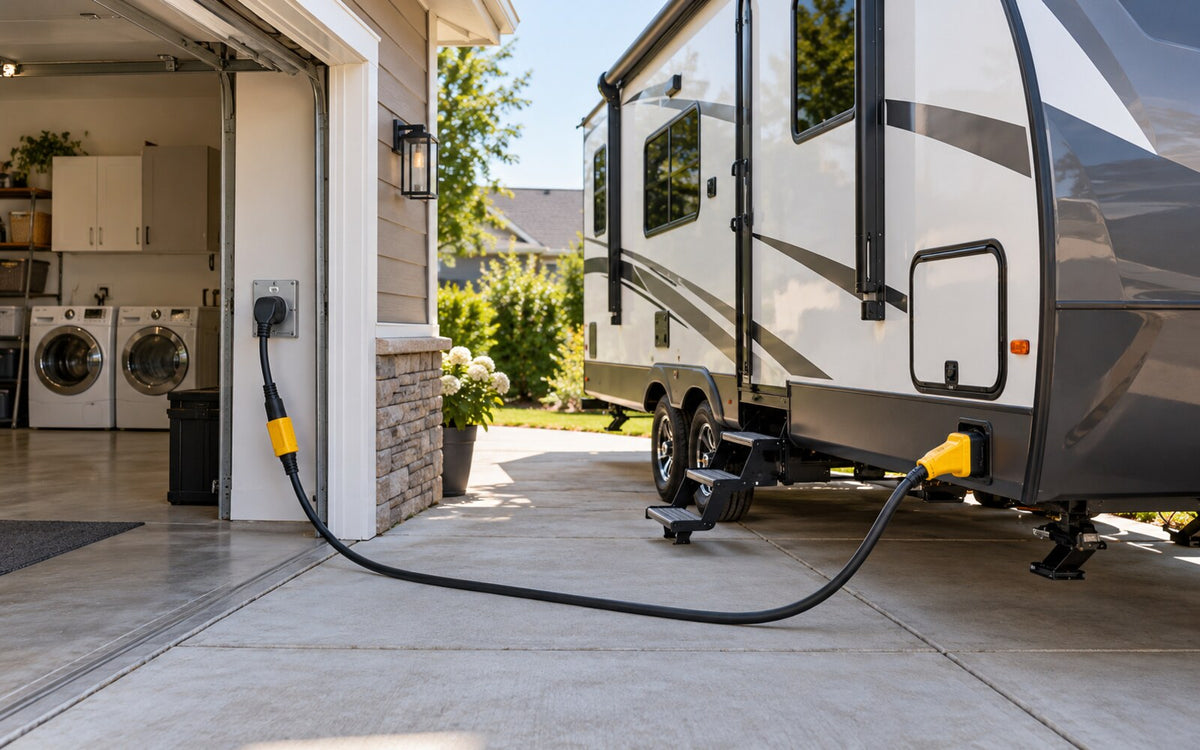
If your home has a four-prong NEMA 14-30 dryer outlet and your RV uses a 30 amp connection, a purpose-built adapter can use one hot leg to deliver 120-volt power to the RV. Do not use a generic or improvised adapter, and have a licensed electrician confirm the receptacle if you cannot positively identify it.
This can give a 30 amp RV a more suitable at-home power source than a regular household outlet, especially when you want to run the RV air conditioner.
Why a Regular Household Outlet May Fall Short
At home, many RV owners first try a standard household outlet because a campground power pedestal is not available. The transcript explains that this can severely limit what the RV can power. Depending on the setup, the air conditioner may consume most of the available power, or it may not run from the household outlet at all.
A newer four-prong dryer outlet may provide another option. The key is identifying the connection correctly and using an adapter designed specifically for the voltage and plug configuration.
The Connections in Plain Language
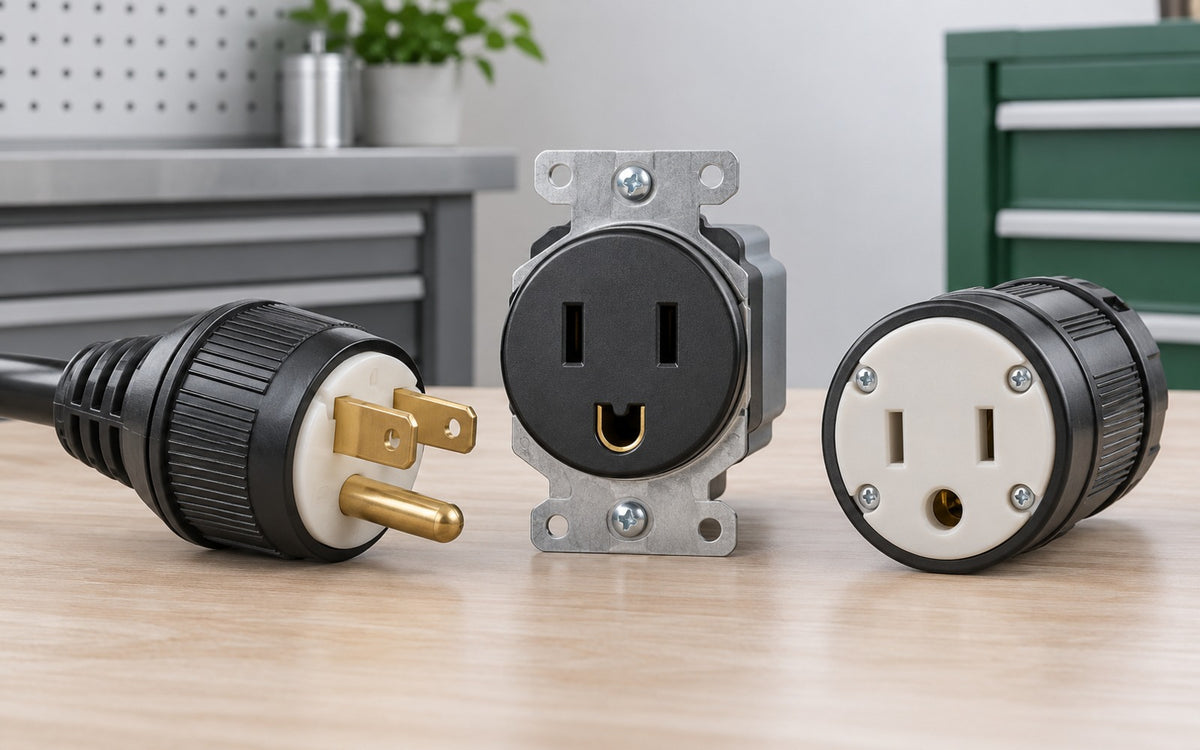
- NEMA 14-30 dryer outlet: A newer four-prong dryer receptacle rated for 120/240 volts.
- 30 amp RV connection: The RV side expects 120-volt power.
- Purpose-built adapter: The adapter uses one hot instead of both hots, so the RV connection receives 120 volts.
That distinction matters. The wall receptacle can support both 120 and 240 volts, but the adapter described in the transcript is wired to supply the 120-volt connection required by the 30 amp RV.
How the NEMA 14-30 to 30 Amp RV Adapter Works
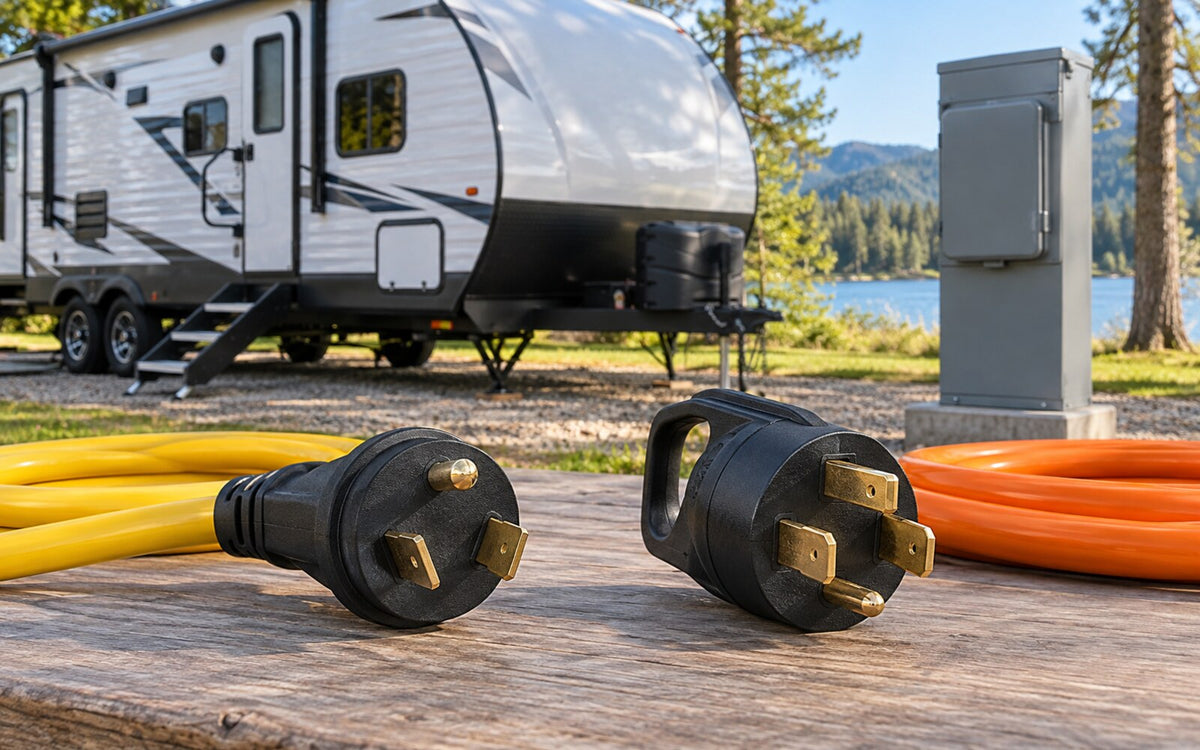
A NEMA 14-30 receptacle has four prongs and is commonly used with a newer electric clothes dryer. For the setup covered here, the AC WORKS® RV1430TT-018 adapter connects that dryer-style source to a 30 amp RV cord.
The adapter does not pass both hot legs through to the RV. It uses one hot leg, which makes the RV-side connection 120 volts. In other words, the purpose-built adapter matches the RV's required voltage instead of sending 240 volts to it.
Before You Connect
- Confirm that the source is a four-prong NEMA 14-30 dryer outlet. Do not identify it only by the fact that a dryer plugs into it.
- Confirm that the RV uses a 30 amp connection.
- Use a purpose-built adapter made for a NEMA 14-30 source and a 30 amp RV connection.
- If the outlet, wiring, or receptacle type is uncertain, stop and ask a licensed electrician to verify it.
Do not modify a cord or receptacle to force a connection. The safe result depends on the correct four-prong source and the correct adapter wiring.
What Can You Power in the RV?
The main advantage described in the transcript is having a stronger at-home power option than a regular household outlet. A standard household connection may leave enough power for only the air conditioner, or it may not support the air conditioner in that setup. A compatible NEMA 14-30 connection and purpose-built adapter are intended to give the 30 amp RV an appropriate 120-volt supply.
The transcript does not promise that every appliance can run at the same time. Treat the RV's own electrical limits and the connected equipment as the boundary for what you operate.
When a Licensed Electrician Is Appropriate
Call a licensed electrician when you cannot positively identify the outlet, when the receptacle appears altered or damaged, or when you are unsure how the circuit is wired. The adapter is for a correctly wired NEMA 14-30 receptacle; it is not a substitute for repairing or changing household wiring.
For product-fit questions about the adapter itself, contact AC WORKS® before connecting equipment.
Frequently Asked Questions
Can a NEMA 14-30 dryer outlet power a 30 amp RV?
Yes, when it is a correctly identified four-prong NEMA 14-30 outlet and you use a purpose-built adapter for a 30 amp RV connection.
Will 240 volts reach the RV through this adapter?
The adapter described in the transcript uses one hot leg rather than both, so the RV-side connection is 120 volts.
Why not use a regular household outlet?
A regular household outlet can limit what the RV can power. The transcript notes that the air conditioner may use most of the available power or may not run in that setup.
Share:
30 Amp vs. 50 Amp RV Power: Outlet and Adapter Output Guide