


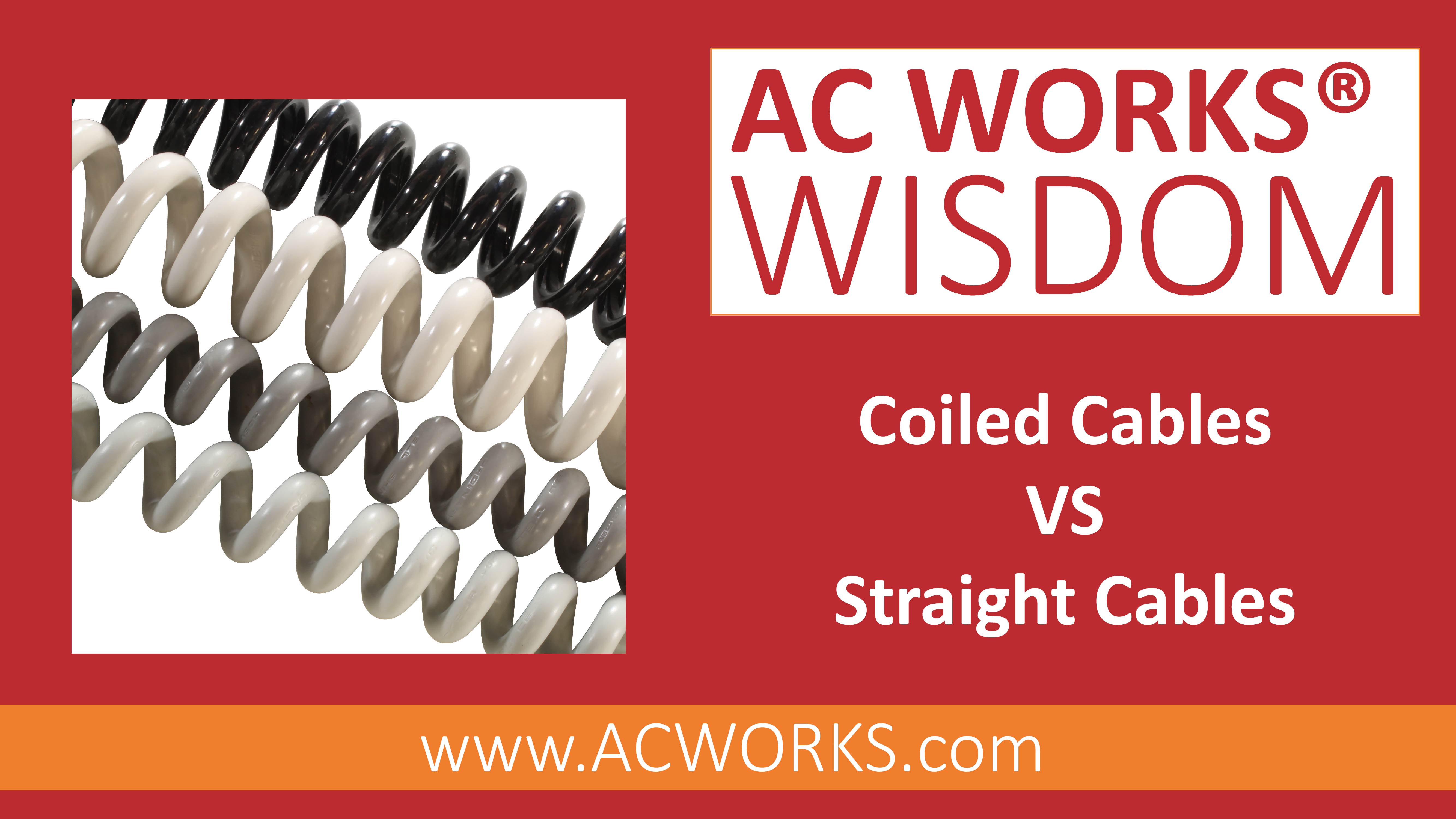
When shopping for power cords, you will most likely come across just plain old straight cables. While these are effective for nearly any situation, there’s another alternative for your cable needs. What is it?
Coiled cables. Coiled cables have many differences in structure, and in usage. This video will cover those differences in an effort to help you decide which cable is best for you.
If you have any more questions about which cable is adequate for the job at hand, please contact us through a phone call, text, or email.
Like, comment, and subscribe to see more videos just like this one. Shoot us an email if there is a topic you would like to see us cover. Thank you for watching!
AC Connectors strives to provide power solutions to its customers since its founding in 2015. From our headquarters (Oak Creek Wisconsin, USA), we provide solutions worldwide and work efficiently to ship our AC WORKS® brand products out quickly, especially to those struck by natural disasters.

Home Page: https://acworks.com/
Facebook: https://www.facebook.com/acworksconnectors/
Twitter: https://twitter.com/AC_Connectors
Instagram: https://www.instagram.com/acconnectors/
Pinterest: https://www.pinterest.com/acworksmarketinggmailcom/boards/


Share:
AC WORKS® Wisdom: How to Power Swimming Pool Pumps
Big Announcement From Cordtec Power Corporation!