


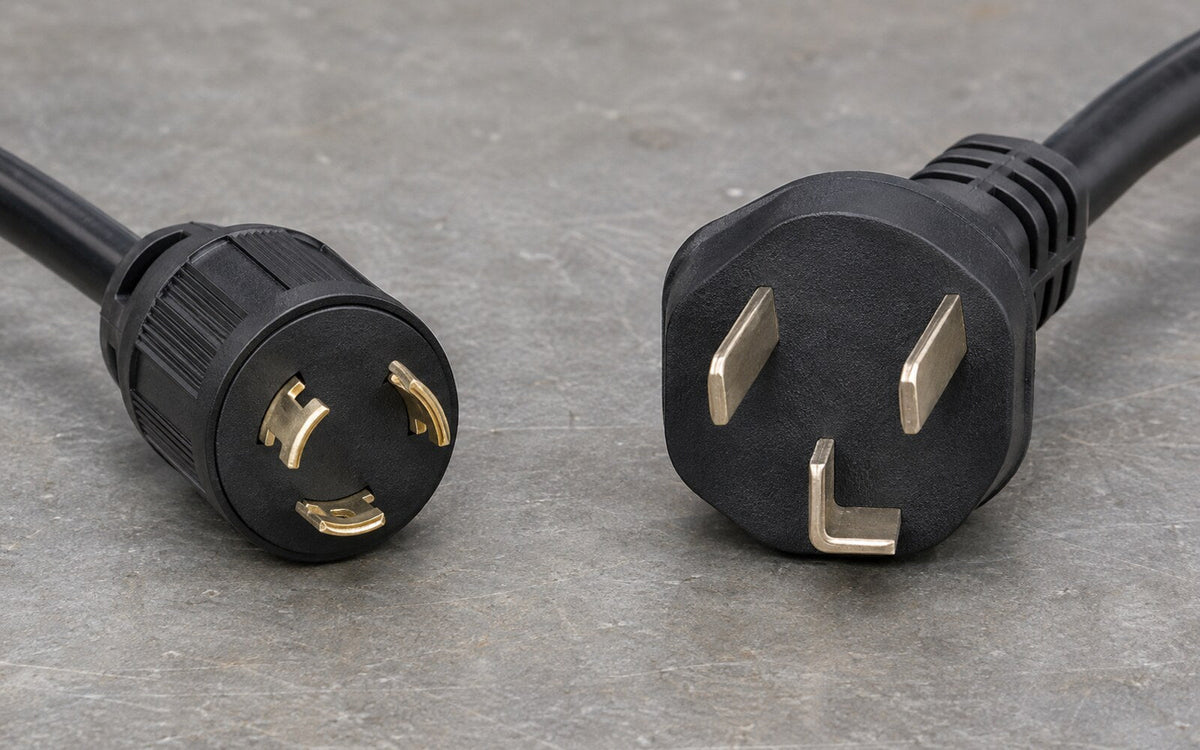
NEMA L5-30 and NEMA 10-30 are not interchangeable. L5-30 is a smaller 30-amp, 125-volt locking connection commonly used with pool pumps and power tools, while 10-30 is a larger three-prong dryer connection rated for 30 amps at 250 volts.
Quick Comparison
- NEMA L5-30: A compact, three-prong locking connection rated for up to 30 amps at 125 volts.
- NEMA 10-30: A larger, three-prong dryer connection rated for 30 amps at 250 volts.
- Physical fit: The connector shapes and sizes are different, so an L5-30 connector will not fit a NEMA 10-30 dryer plug (also because it requires locking).
- Dryer use: A dryer that requires NEMA 10-30 needs its dedicated dryer connection; it cannot run from a standard 15-amp, 125-volt household outlet.
For visual help before choosing a cord or adapter, use the AC WORKS® configuration-matching guide and outlet reference.
What Is a NEMA L5-30 Connection?
NEMA L5-30 is a locking plug-and-connector configuration rated for up to 30 amps at 125 volts. Its locking design and compact size distinguish it from the much larger three-prong dryer connection. The transcript identifies pool pumps and power tools as common applications.
The key point is voltage and intended use: L5-30 is a 125-volt locking connection. A similar prong count does not make it a dryer connection.
What Is a NEMA 10-30 Connection?
NEMA 10-30 is a three-prong dryer plug and outlet configuration rated for 30 amps at 250 volts. A dryer that uses this connection needs the full dedicated dryer circuit described by its plug and equipment requirements.
Because the 10-30 connection is physically larger and carries a different rating, it should not be confused with a compact locking connector. The correct match is a NEMA 10-30 plug with a compatible NEMA 10-30 outlet or an appropriate adapter arrangement that matches the available 250-volt source.
The Common S515L530-012 Dryer Adapter Mistake
The AC WORKS® S515L530-012 flexible adapter has sometimes been selected in the hope that its L5-30 connector will accept a dryer plug. It will not. The L5-30 connector end is smaller and is designed for an L5-30 locking plug, not the larger NEMA 10-30 dryer plug.
This is why matching by number of prongs alone can lead to the wrong choice. Check the full configuration on the equipment plug and the power-source outlet before selecting an adapter.
Which Outlets Can Be Considered for a Three-Prong Dryer?
When adapting a three-prong NEMA 10-30 dryer connection, the power source still needs to provide the required 250-volt service. The source transcript identifies these outlet configurations as possibilities:
- NEMA 14-30
- NEMA 14-50
- NEMA 10-50
The adapter must match both the available outlet and the dryer plug. Review the AC WORKS® NEMA configuration overview to understand how configuration labels help identify plugs and connectors.
How to Identify the Correct Connection
Use this short check before selecting a cord or adapter:
- Read the NEMA marking on the equipment plug.
- Identify the exact outlet configuration available at the power source.
- Confirm that the voltage and amperage requirements match the equipment.
- Compare the connector size, blade pattern, and locking or non-locking design.
- If the markings are missing or the connection is uncertain, stop and ask for qualified help.
Never force a plug into an outlet or assume that similar-looking three-prong connections are compatible. A licensed electrician is appropriate when an outlet is damaged, unlabeled, needs installation or replacement, or when the circuit and equipment requirements are uncertain.
Frequently Asked Questions
Can a NEMA L5-30 connection power a three-prong dryer?
No. NEMA L5-30 is a 30-amp, 125-volt locking connection. A NEMA 10-30 dryer requires its 30-amp, 250-volt connection.
Will an S515L530-012 adapter fit a NEMA 10-30 dryer plug?
No. Its L5-30 connector is too small and has a different locking configuration. It is not a dryer connector.
Is every three-prong plug the same?
No. L5-30 and 10-30 both use three conductors, but their shapes, sizes, voltage ratings, amperage ratings, and intended uses differ.
What should I do if I cannot identify my plug or outlet?
Do not guess or force a connection. Use the configuration guides, compare the exact markings, and contact AC WORKS® for connection help. Consult a licensed electrician when the outlet, circuit, or equipment requirements need verification.

Share:
NEMA 5-15 vs. NEMA 6-50: How to Tell These Plugs Apart