


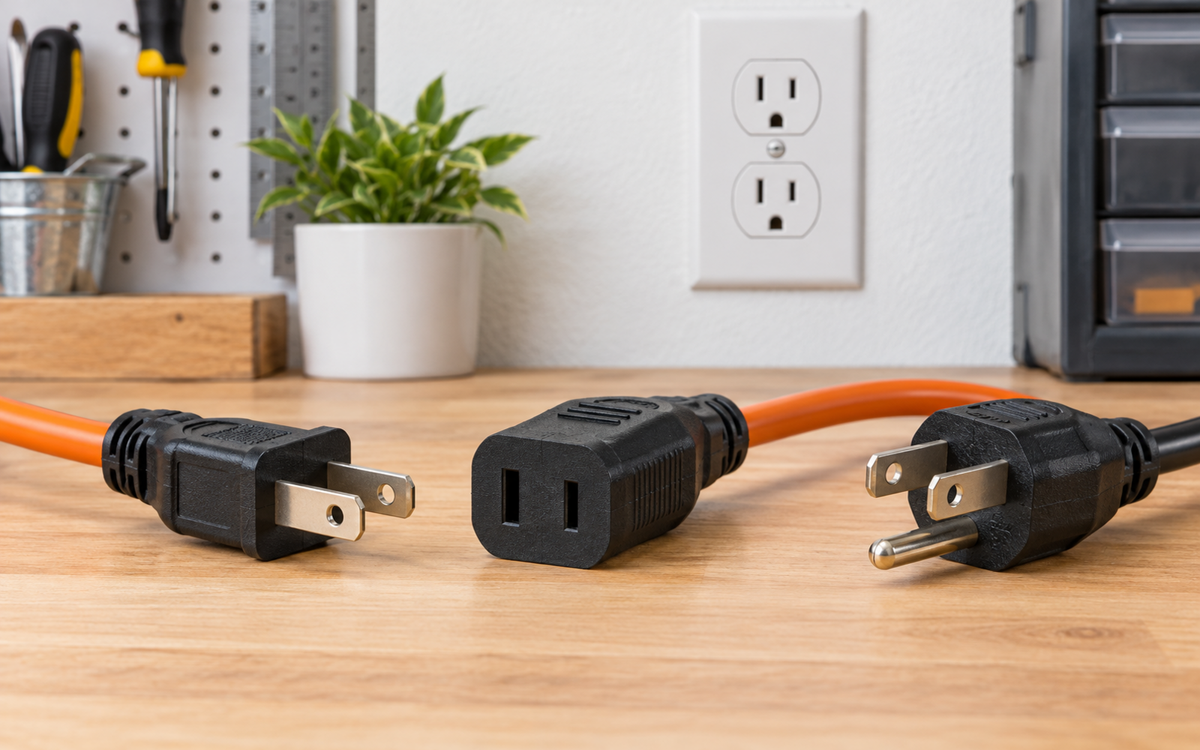
A polarized extension cord or plug has one blade wider than the other so it can connect in only one orientation. That design keeps the hot side aligned with the hot side of the receptacle and the neutral side aligned with the neutral side. The practical rule is simple: use connections only as designed, and never alter a plug to make it fit.
What Is a Polarized Extension Cord?
A polarized connection is a two-prong plug-and-receptacle system designed to preserve the intended hot and neutral orientation. On a polarized plug, one flat blade is wider than the other. The matching receptacle or extension-cord connector has one wider slot, so the plug cannot be reversed.
That physical difference is a built-in compatibility cue. It helps the plug enter the correct slots and supports the intended path through the circuit. Many older homes may still have two-slot receptacles, so recognizing polarization is especially useful when evaluating an existing connection.
How to Identify a Polarized Plug or Outlet
- Look closely at the two blades on the plug.
- Check whether one blade is visibly wider than the other.
- Inspect the matching receptacle or extension-cord connector for one wider slot.
- Confirm that the plug enters easily in only the intended orientation; never force it.
If the plug has two equal-width blades, it is non-polarized. Small device power supplies, such as some phone charger blocks, may use equal-width blades. For unfamiliar configurations, compare the connection with the AC WORKS® plug and connector matching guide before selecting a cord or adapter.
Polarized vs. Non-Polarized Two-Prong Plugs
- Polarized plug: one blade is wider, and the plug fits the matching connection in one direction.
- Non-polarized plug: both blades are the same size.
- Three-prong grounded plug: includes hot, neutral, and ground connections and requires a compatible grounded connection.
The number and shape of the prongs are not decorative. They show how a connection is intended to be used. Notches and molded barriers on some extension-cord connectors also help block partial insertion or an incompatible three-prong plug.
Can You Use Two-Prong and Three-Prong Connections Together?
A two-prong plug can fit a compatible three-slot household receptacle or extension-cord connector. The reverse is different: a three-prong plug should not be pushed into a two-slot connection, and its grounding pin must never be clipped or removed.
The transcript also shows a two-to-three-prong grounding adapter with a grounding ring or tab that attaches at the outlet cover screw. This type of adapter must be used only as designed. If you cannot confirm that the connection is properly grounded, stop and ask a licensed electrician to inspect it. Attaching a tab is not a reason to assume an unknown outlet is safe.
For more household-connection context, review the AC WORKS® residential outlet overview.
Why Extension-Cord Notches and Warning Tags Matter
Some newer two-prong extension-cord connectors include molded notches and barriers. These features can prevent someone from inserting only part of a plug or trying to leave a grounding pin exposed. Warning tags may also state that a three-prong cord or plug should not be connected to a two-prong outlet or extension cord.
Treat those physical barriers and warnings as safety information. Do not cut, file, bend, clip, or otherwise modify a plug, connector, or grounding pin to bypass them.
Safe Use Checklist
- Match the plug to a receptacle or connector designed to accept it.
- Check for the wider blade and wider slot when identifying a polarized two-prong connection.
- Keep every grounding pin intact.
- Never force a plug or defeat molded notches and barriers.
- Follow warning tags on cords and connectors.
- Call a licensed electrician when an outlet is old, damaged, ungrounded, unclear, or would require rewiring or replacement.
The AC WORKS® safety guide provides additional cord and receptacle safety reminders.
Frequently Asked Questions
What does a wider prong on a plug mean?
A wider blade identifies a polarized plug. It aligns with the wider slot so the plug can connect in only the intended orientation.
How can I tell whether a two-prong plug is polarized?
Compare the blades. One wider blade means the plug is polarized; two equal-width blades mean it is non-polarized.
Can I plug a three-prong plug into a two-prong extension cord?
No. Do not force the connection, leave the grounding pin exposed, or remove the grounding pin. Use only a compatible connection designed for the plug.
Can a two-prong plug go into a three-prong outlet?
A compatible two-prong plug can fit a three-slot household receptacle or extension-cord connector. Insert it normally without forcing or modifying either connection.
When should I call a licensed electrician?
Call a licensed electrician when the outlet is old, damaged, has only two slots and its grounding is uncertain, or any rewiring, replacement, or grounding verification is needed.

Share:
Dryer Outlet Uses: EV Charging, Welding, and NEMA Adapter Options