



There can be a wide variety of protective technology built into an electrical appliance, but the two most common are surge protectors and circuit breakers. So what is the difference between the two?
Surge protectors protect your electrical appliances from voltage spikes. A voltage spike is when a cord or appliance exceeds the voltage it is rated for, resulting in permanent damage to your appliance. The most common places you will see these installed are power strips like our PSROT-072. Usually, you will have computers, TVs, entertainment systems, and office equipment plugged into one of these. The most common cause of a voltage spike is a lightning storm and downed power lines. Surge protectors aren’t mandated by state or community regulations but are highly recommended.
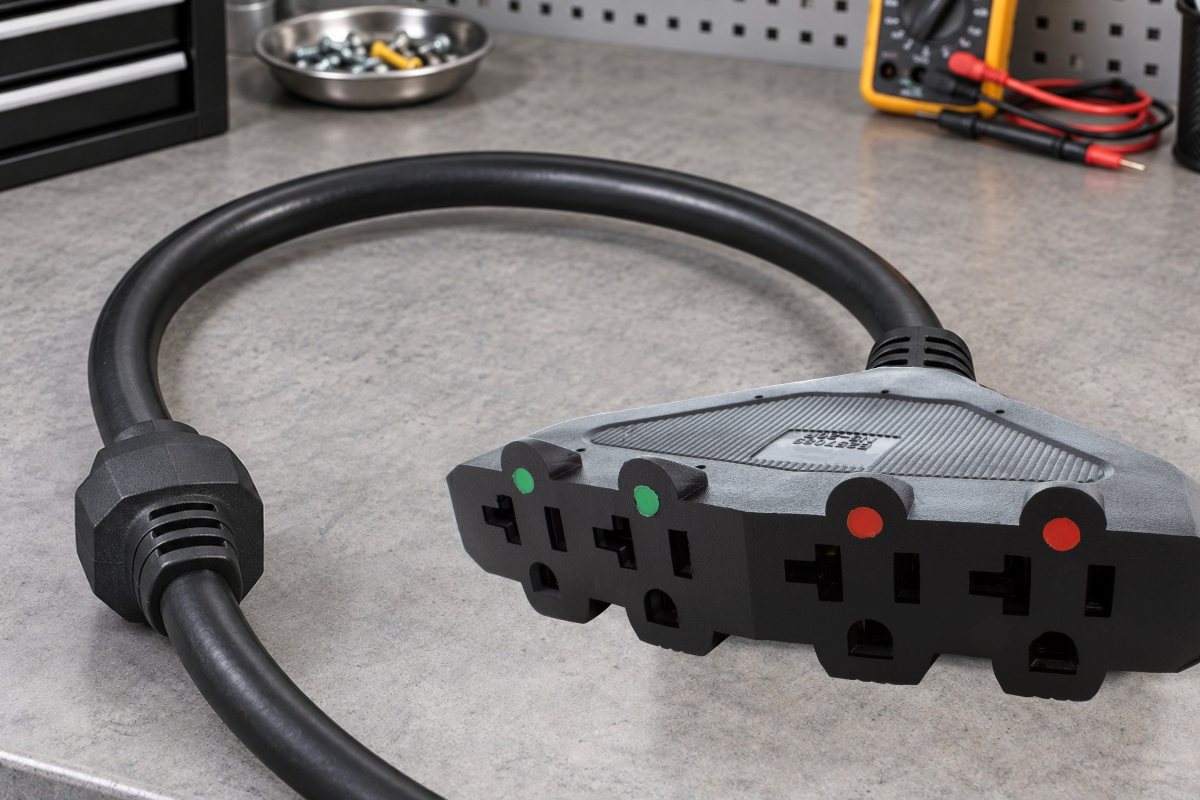
Circuit breakers on the other hand are mandated. Your house, apartment, or place of work will all have a panel with man circuit breakers built-in. The circuit breaker’s job is to prevent you from accidentally overloading a circuit, which in turn can cause overheating and eventually a fire. This usually happens if you have too many appliances running on one circuit or if you have a faulty appliance that pulls more amps than is necessary. We carry circuit breaker protected adapters to give you an extra layer of protection. The little red button will pop when it is overloaded. Once you have found and fixed the problem, you can press it back into place and continue to work. This will also prevent you from having to go all the way to the circuit panel to reset it.
So as you can see, they both offer protection, but in different ways. Surge protection protects from a surge of volts, whereas a circuit breaker protects from an overload of amps. If you have any additional questions about electrical safety, please leave us a comment down below. Thank you for watching!
AC Connectors strives to provide power solutions to its customers since its founding in 2015. From our headquarters (Oak Creek, Wisconsin, USA), we provide solutions worldwide and work efficiently to ship our AC WORKS® brand products out quickly, especially to those struck by natural disasters.
Share:
Download Issue 6 of the WRAP UP Newsletter
How to Order the GEKIT01