


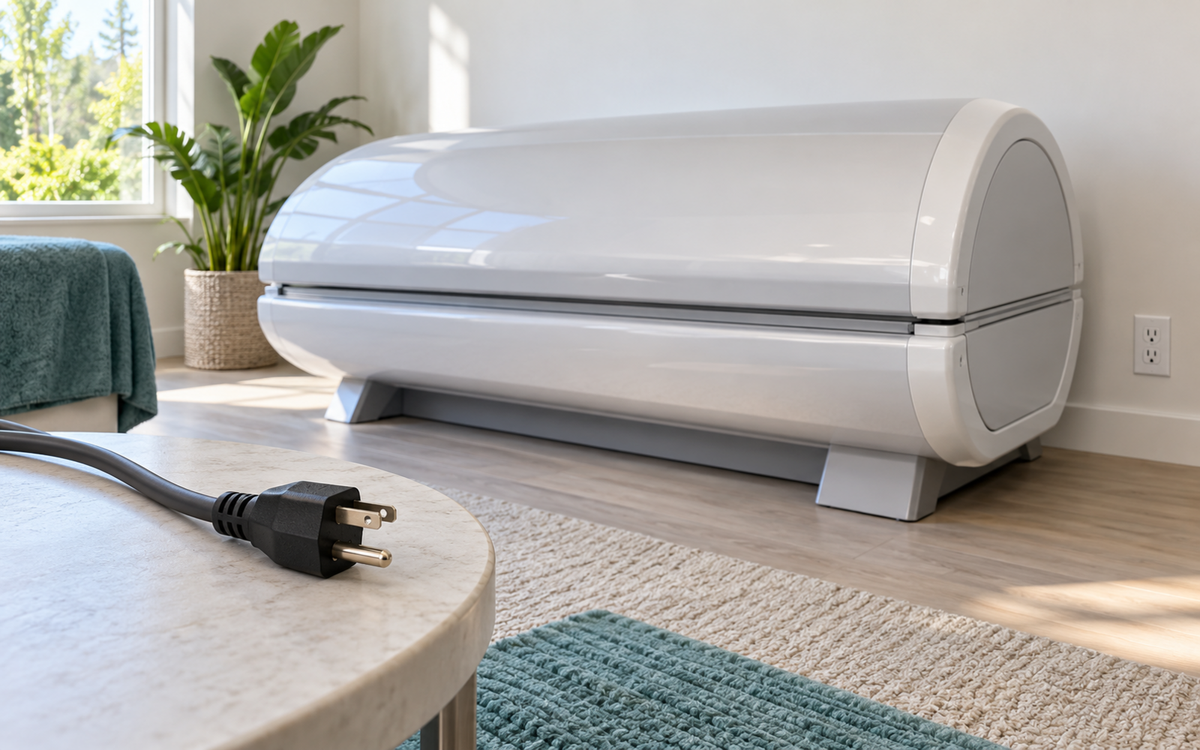
To power a tanning bed safely, start with the equipment tag and user manual. Match the bed’s required NEMA connection, voltage, and amperage to the available receptacle. Common tanning-bed connections include NEMA 5-15 at 15 amps and 120 volts, NEMA 5-20 at 20 amps and 120 volts, and NEMA 6-20 at 20 amps and 240 volts. If the correct receptacle is not available, or if you are unsure whether the circuit is appropriate, have a licensed electrician evaluate the installation.
Start With the Equipment Tag and Manual
A tanning bed’s electrical requirements can vary with the size of the bed and the number of lamps. The equipment tag and the manufacturer’s user manual provide the exact connection requirements for that model. Check both before choosing a receptacle, cord, or power solution.
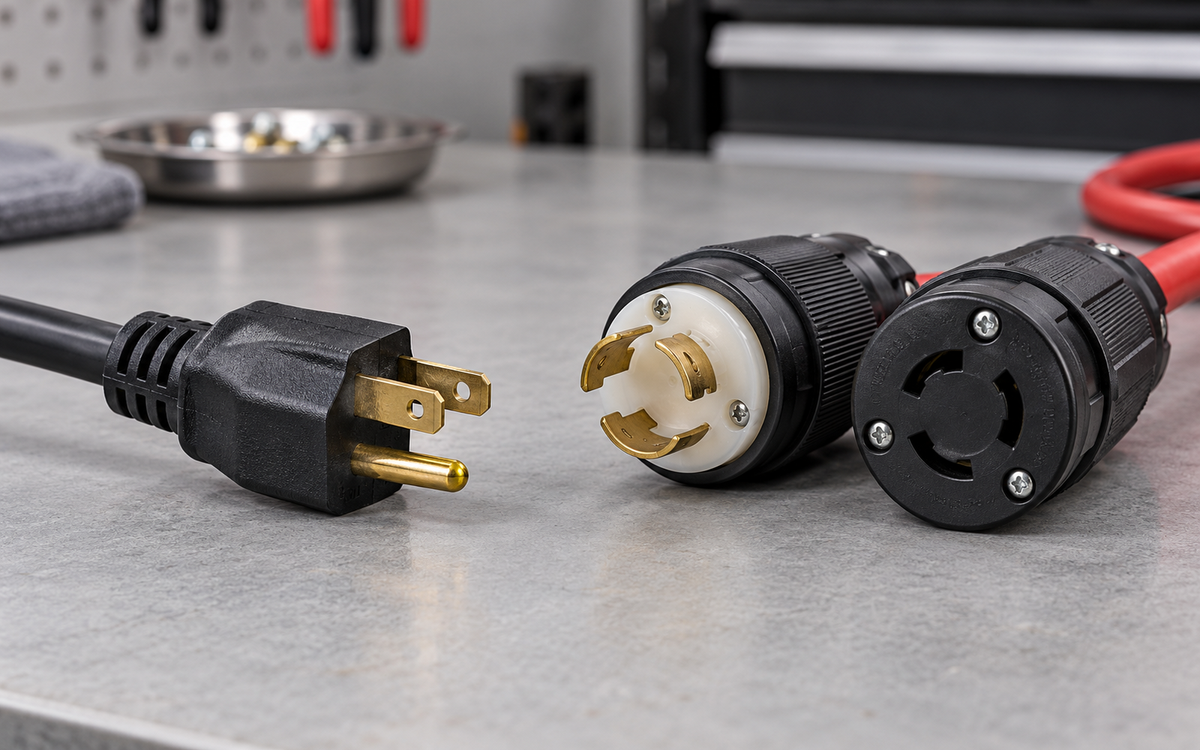
Plug shapes can look similar at a glance. Use the AC WORKS® plug and connector matching guide to compare configurations, but let the tanning bed’s tag and manual control the final decision.
Common Tanning Bed Plug Types
The transcript identifies three common connections used with tanning beds:
- NEMA 5-15: 15 amps, 120 volts. This is the regular household connection.
- NEMA 5-20: 20 amps, 120 volts. This is a T-blade household connection. Review AC WORKS® NEMA 5-20 outlet solutions for a visual reference.
- NEMA 6-20: 20 amps, 240 volts. Review AC WORKS® NEMA 6-20 outlet solutions for a visual reference.
These are common configurations, not a substitute for model-specific instructions. Always confirm the exact NEMA designation, voltage, and amperage required by your tanning bed.
How to Check Your Tanning Bed’s Power Requirements
- Read the tag attached to the tanning bed or plug.
- Open the user manual and find the electrical connection requirements.
- Confirm the required NEMA configuration, voltage, and amperage.
- Compare those requirements with the receptacle available in the room.
- Confirm that the tanning bed will be served by its own circuit breaker.
- Contact a licensed electrician if the required receptacle is missing or the circuit is uncertain.
Why a Dedicated Circuit Breaker Matters
The transcript recommends that the tanning bed have its own circuit breaker. In practical terms, the breaker should serve the tanning bed rather than several unrelated devices. A licensed electrician can verify the circuit and install the correct receptacle when needed.
Do not attempt to change a receptacle or circuit unless you are qualified to perform that electrical work. The safe choice is to match the equipment to a properly installed power source.
The Bottom Line
A tanning bed may use a standard-looking 120-volt connection or a 240-volt connection, depending on the model. The reliable process is simple: read the tag, check the manual, identify the NEMA plug, confirm voltage and amperage, and verify a dedicated circuit. When the room does not already have the required connection, call a licensed electrician.
Frequently Asked Questions
What outlet does a tanning bed use?
Common tanning-bed connections include NEMA 5-15, NEMA 5-20, and NEMA 6-20. The correct outlet depends on the specific bed, so check its tag and manual.
Can a tanning bed use a regular household outlet?
Some models use a NEMA 5-15, 15-amp, 120-volt household connection. Other models require a 20-amp or 240-volt connection. Use only the connection listed for your equipment.
How can I identify my tanning bed plug?
Read the tag on the plug or tanning bed and compare the NEMA configuration, voltage, and amperage with the manual. Do not identify it by appearance alone.
Does a tanning bed need its own breaker?
Yes. The transcript recommends a dedicated circuit breaker for the tanning bed. Ask a licensed electrician to verify or install the circuit when needed.
Share:
What Do Red and Green Dots Mean on a Power Distribution Adapter?