


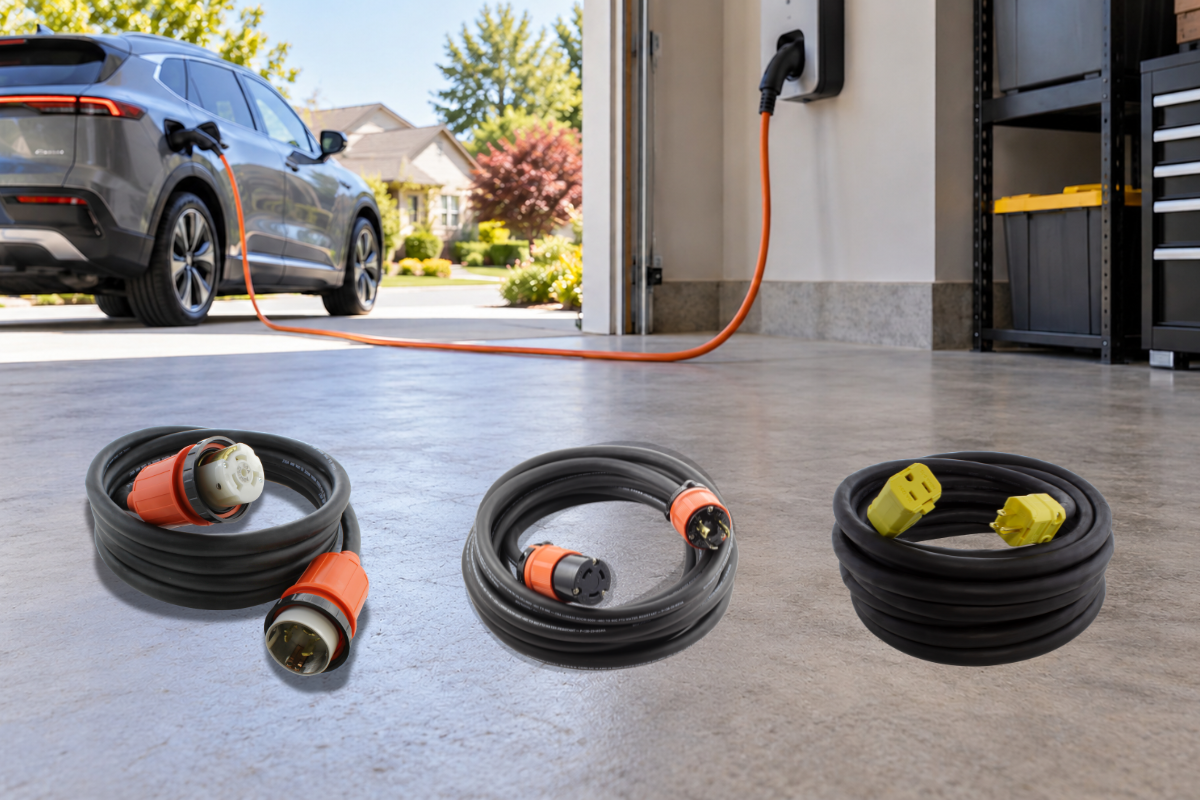
To reduce voltage drop over a long extension-cord run, use a properly rated cord with heavier wire, represented by a lower gauge number in this comparison. In the AC WORKS® 100-foot test, loaded voltage improved as the cord changed from 14 gauge to 12 gauge to 10 gauge while the current stayed at 15 amps.
What Is Voltage Drop?
Voltage drop is the reduction in voltage observed when current travels through a long cable under load. The demonstration began at 120 volts before charging started. Once a 15-amp load was applied through each 100-foot cord, the measured voltage decreased. The comparison kept the distance and load consistent so the difference in cord gauge could be seen clearly.
AC WORKS® notes that voltage drop commonly becomes a concern on cable runs of about 50 feet or longer. The actual reading in any setup can vary, so the measurements below should be treated as a practical demonstration rather than a guaranteed result for every circuit, cord, or device.
What the 100-Foot Cord Comparison Showed
- 14-gauge, 15-amp cord: The starting reading was 120 volts. Under a 15-amp load, the voltage fell to about 105-106 volts.
- 12-gauge, 20-amp heavy-duty cord: With the same distance and load, the reading was about 109-110 volts.
- 10-gauge, 30-amp super-duty cord: Under the same test conditions, the reading was about 111-112 volts.
The electric vehicle in the demonstration made it possible to set the load to 15 amps for each comparison. The same basic concern can matter when a long cord powers tools or other outdoor equipment: the voltage available under load can be lower than the no-load reading.
Why Cord Gauge Changed the Result
In this comparison, each step to a lower gauge number also meant a visibly thicker cable. With the distance fixed at 100 feet and the load fixed at 15 amps, the thicker 12-gauge and 10-gauge cords retained more voltage than the 14-gauge cord. The 10-gauge cord produced the highest loaded-voltage reading of the three.
That does not mean a heavier cord changes the power source or allows equipment to exceed its ratings. Cord gauge is one part of a safe setup. The cord, plug, receptacle, circuit, and connected equipment must all be appropriate for the load.
How to Choose an Extension Cord for a Long Run
- Confirm the current required by the equipment and the rating printed on the cord.
- Make sure the plug and connector match the intended outlet and equipment.
- Account for the full cable distance, especially when the run reaches 50 feet or more.
- Compare properly rated cord options by wire gauge; in the 100-foot test, the lower gauge numbers produced less voltage drop.
- Check how the equipment behaves under load and stop using any cord that is damaged, unusually hot, or otherwise unsafe.
Never use an extension cord or adapter to bypass the rating of an outlet, circuit, plug, or device. If you are unsure whether a circuit is suitable, if voltage remains unexpectedly low, or if a receptacle or wiring may need evaluation, consult a licensed electrician.
Relevant AC WORKS® Extension-Cord Resources
For a household-plug example, see the AC WORKS® heavy-duty 12-gauge outdoor extension cord. It is available in multiple lengths, including a 100-foot option that aligns with the test distance.
You can also compare extension cords for industrial and job-site applications. For help identifying a suitable connection for your equipment and available outlet, contact AC WORKS®.
Frequently Asked Questions
Does a longer extension cord cause more voltage drop?
The demonstration explains that voltage drop becomes more noticeable over longer distances, commonly around 50 feet or more. At 100 feet, all three cords showed lower voltage under load than the initial 120-volt reading.
Which wire gauge performed best in the 100-foot test?
The 10-gauge cord retained the most voltage, reading about 111-112 volts at 15 amps. The 12-gauge cord read about 109-110 volts, and the 14-gauge cord read about 105-106 volts.
Is a lower gauge number a thicker cord?
Yes, in the cords compared in this demonstration. The 12-gauge heavy-duty and 10-gauge super-duty cables were visibly thicker than the 14-gauge cord, and they showed less voltage drop under the same load.
Can a heavier-gauge cord increase the amperage available from an outlet?
No. A heavier cord does not raise the outlet or circuit rating. Stay within the ratings of every part of the setup, including the circuit, receptacle, plug, cord, and connected equipment.
When should I call a licensed electrician?
Contact a licensed electrician when you are uncertain about the circuit or receptacle, when voltage remains unexpectedly low, or when wiring or outlet condition may need evaluation. Do not work on energized wiring unless you are qualified to do so.

Share:
How to Power a Tanning Bed Safely: NEMA 5-15, 5-20, and 6-20 Connections Explained