


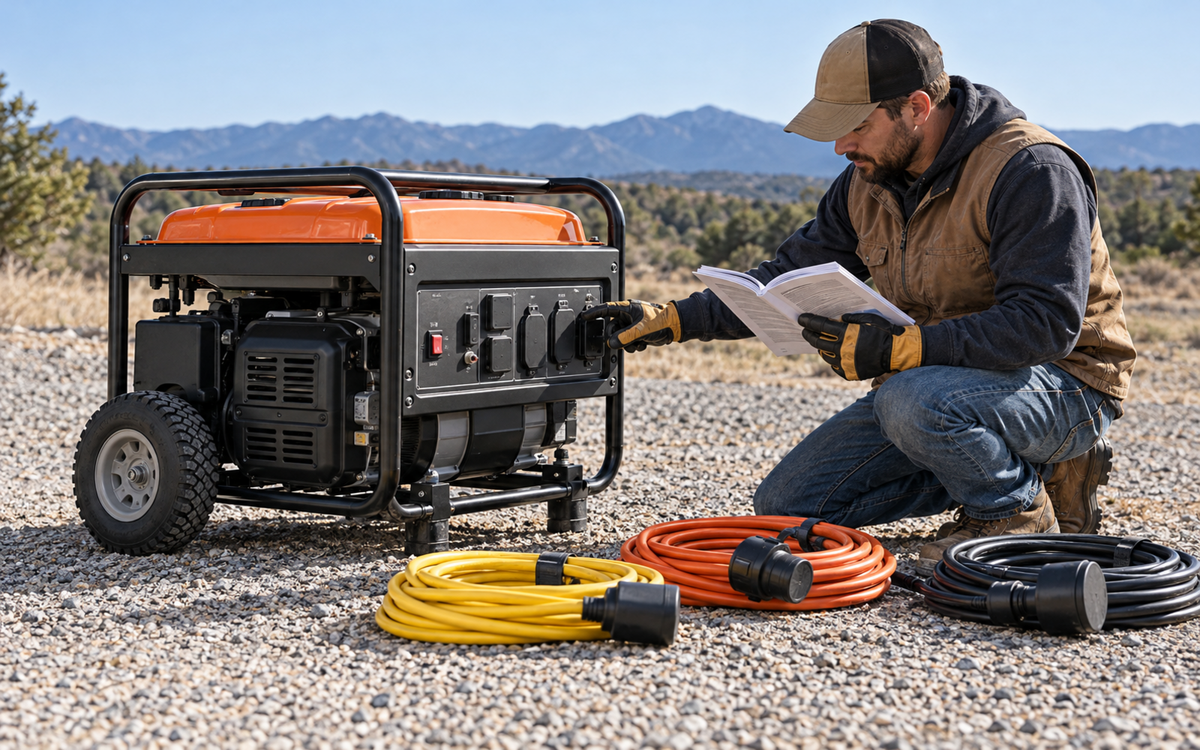
The most common portable generator outlets are household-style NEMA 5-15 or 5-20 receptacles, the 30-amp NEMA L5-30, the 30-amp NEMA L14-30, and the RV-style NEMA TT-30. The right connection depends on the exact NEMA code, voltage, amperage, and receptacle shape printed on your generator.
Portable generators support food trucks, RVs, emergency power, and other temporary-power needs. Because generator panels vary, identifying each outlet before selecting a cord or adapter is the safest place to start.
Common Generator Outlet Types
These are the four configurations AC WORKS® customers most often encounter on portable generators:
- NEMA 5-15 or 5-20: Familiar household-style receptacles for standard straight-blade plugs.
- NEMA L5-30: A three-prong locking receptacle rated for 30-amp service at 120 volts.
- NEMA L14-30: A four-prong locking receptacle rated for 30-amp service at 120 or 240 volts.
- NEMA TT-30: A 30-amp RV-style receptacle that resembles the connection commonly found at campgrounds.
A generator may include several of these receptacles on the same control panel. For additional examples, see AC WORKS®’ guide to common generator outlet options.
How to Identify a Generator Outlet
The NEMA code is the most reliable identifier. Shape is useful, but it should confirm the printed rating rather than replace it.
- Read the NEMA code printed on or next to the receptacle.
- Confirm the printed voltage and amperage rating.
- Count the prongs or slots and note whether the connection is straight-blade, locking, or RV-style.
- Match the plug, cord, or adapter to that exact configuration.
The household-style NEMA 5-15 and 5-20 are visually familiar. A NEMA L5-30 has three locking positions, while a NEMA L14-30 has four. A TT-30 has the recognizable three-slot RV configuration. When reviewing a household-style source, AC WORKS® NEMA 5-15 outlet solutions provide a useful reference; for a four-prong locking source, review AC WORKS® L14-30 outlet solutions.
Understanding 110, 120, and 125 Volt Labels
Generator manufacturers may print 110, 120, or 125 volts on lower-voltage receptacles. These labels refer to the same general voltage class, and a 125-volt rating covers that range. Higher-voltage connections may similarly be labeled 220, 240, or 250 volts.
Always use the rating printed on the actual generator and connection. Do not choose an adapter from voltage wording alone; the NEMA configuration and amperage must also match.
Other Generator Outlets You May See
Some portable generators include additional configurations:
- NEMA 14-50: A 50-amp connection similar to an electric cooking-range outlet and used for heavier-duty power needs.
- NEMA L14-20: A four-prong locking connection that provides 20-amp service. It resembles L14-30, but the two are not plug-compatible.
- NEMA L5-20 and L6-30: Locking configurations that may appear on older or industrial generators and are less common today.
Choosing the Right Cord or Adapter
Start with the generator’s exact outlet code, then identify the plug on the equipment you need to power. Confirm voltage and amperage on both ends before selecting a connection. A cord or adapter can change the physical connection, but it does not change the electrical limits printed on the generator or connected equipment.
Never force a connection or assume two similar-looking locking configurations are interchangeable. If a receptacle is damaged, the labeling is unclear, or the setup would require rewiring or a permanent electrical change, stop and consult a licensed electrician.
Frequently Asked Questions
What are the most common outlets on a portable generator?
The most common are NEMA 5-15 or 5-20 household-style receptacles, NEMA L5-30, NEMA L14-30, and NEMA TT-30.
How can I tell which generator outlet I have?
Read the NEMA code and the voltage and amperage printed beside the receptacle. Then use the slot pattern only as a visual confirmation.
Are 110, 120, and 125 volts different generator outlet classes?
They are commonly used for the same general lower-voltage class. The generator’s printed rating and NEMA code should guide the connection you choose.
Can an L14-20 plug connect to an L14-30 outlet?
No. Although the two locking configurations look similar, their amperage ratings and physical patterns differ, so they are not plug-compatible.
When should I call a licensed electrician?
Use a licensed electrician when a generator receptacle is damaged, its wiring or labeling is uncertain, or the project requires rewiring, replacement, or a permanent electrical installation.
Share:
Why Generators Need Locking Outlets: NEMA L14-30, L5-30, and L14-20 Explained
How to Switch From an Electric Stove to a Gas Stove Safely