


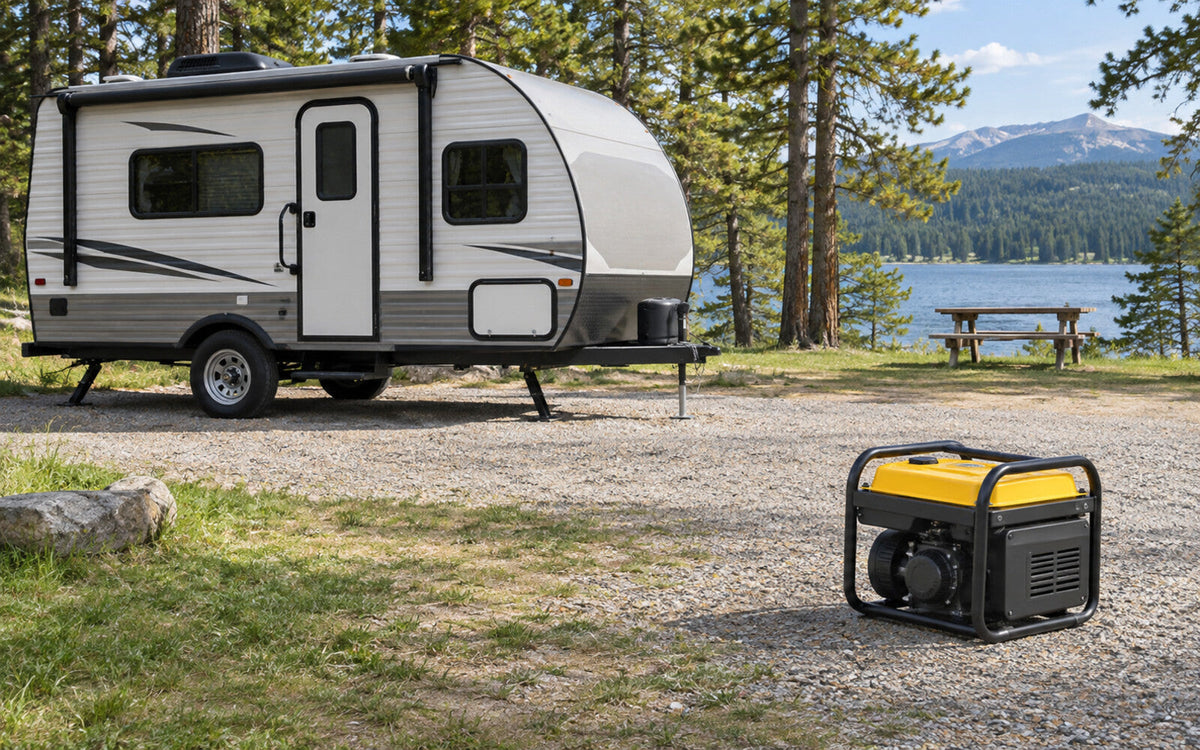
Choose a generator with enough running watts for the appliances you plan to use at the same time, plus enough starting capacity for equipment that needs a surge. A 15-amp, 125-volt connection has a theoretical maximum of 1,875 watts, but that is a connection rating, not a promise that every appliance can run at once.
Understand the 15-Amp Power Limit
The basic calculation is volts × amps = watts. At the connection's 125-volt rating, 125 × 15 = 1,875 watts. Your actual available power depends on the generator, its outlet, the camper connection, and the equipment in use. Check their ratings and follow the manufacturers' instructions; do not treat 1,875 watts as a recommended continuous load.
Running Watts vs. Starting Watts
Running watts describe the power available for ongoing use. Starting watts describe the generator's short-term capacity for a surge when equipment starts. Compare the total running load with the generator's running rating, and check that its starting rating can accommodate the starting demands of your equipment. The larger starting number is not the power available continuously.
How to Choose a Generator
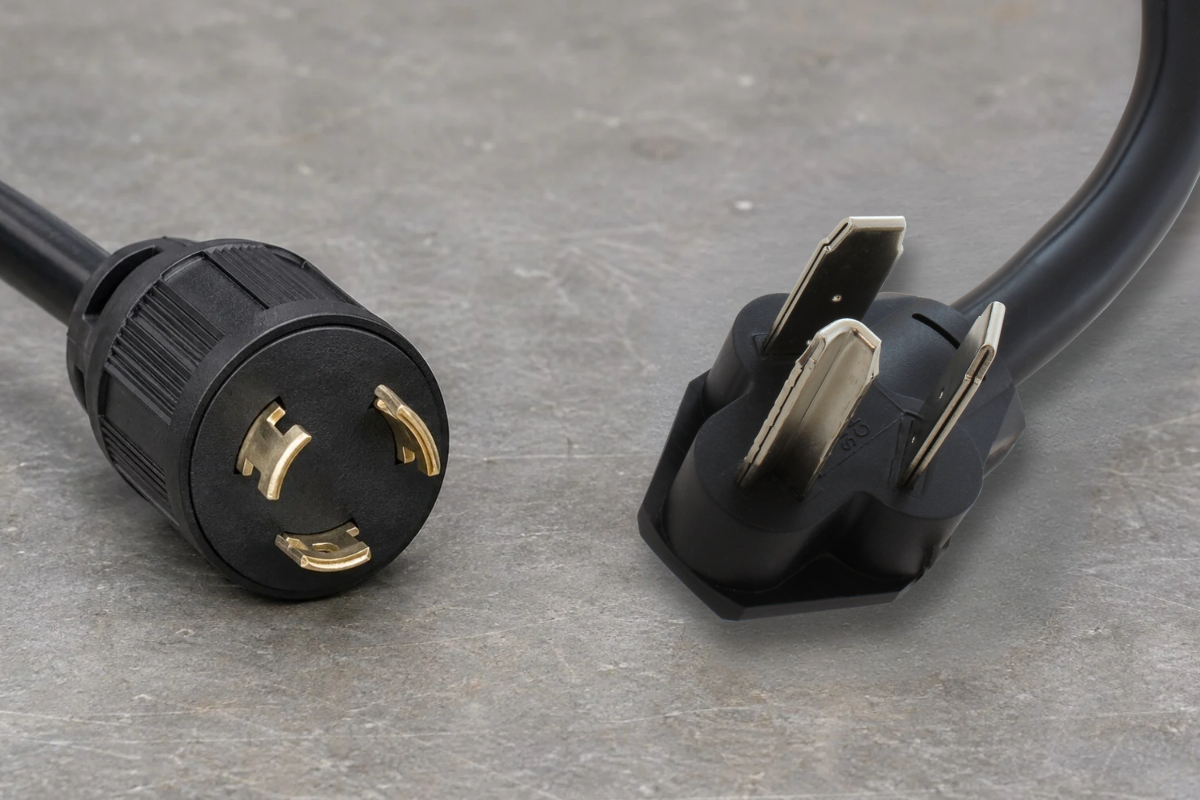
- Confirm the camper's connection and ratings. Many small 15-amp campers use a household-style connection; verify your specific camper and the generator outlet.
- List the appliances you intend to run together. Check their labels or manuals for running and starting requirements.
- Compare the combined load with the generator's running rating and the limits of the outlet, cord, and camper connection. Allow for starting demands as well.
- Consider other equipment you may power separately. Those loads also count against the generator's available output.
In the transcript's example, a generator rated at 3,800 running watts and 4,750 starting watts has substantially more running capacity than the 1,875-watt theoretical connection maximum. That extra capacity can be useful for other equipment, but it does not increase the camper connection's rating. A smaller generator may be sufficient when its ratings cover the intended loads.
Use the Connection Safely
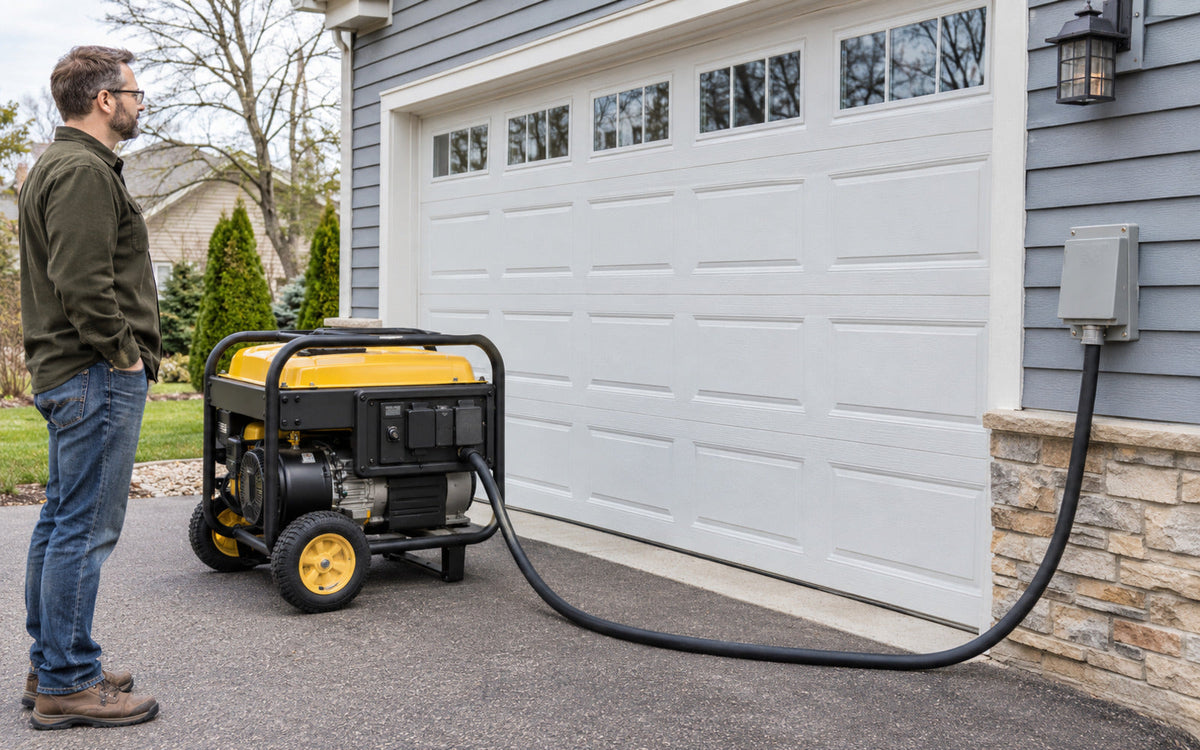
Follow the generator and camper manufacturers' instructions, including placement and ventilation. Never run a fuel-burning generator inside the camper or in an enclosed space; keep exhaust away from openings. Do not overload a circuit or assume an adapter increases its capacity. If you are uncertain about compatibility, circuit protection, or an electrical modification, consult a licensed electrician.
For more background, read AC WORKS®' guide to RV electricity basics and its overview of RV power voltage.
Frequently Asked Questions
Is a 1,875-watt generator always enough for a 15-amp camper?
Not necessarily. Check the combined running loads and the starting needs of the equipment you plan to use, along with the generator's ratings.
Can a larger generator increase a 15-amp connection's capacity?
No. A larger generator can have spare capacity, but the camper connection and each part of the power path remain subject to their own ratings.
What is the difference between running and starting watts?
Running watts are available for ongoing use; starting watts are a short-term capacity for a startup surge.
Can I run everything in my camper at once?
That depends on the appliances and their combined demand. Check their ratings and stay within the limits of the generator and connection.
Share:
50 Amp Generator Inlet Kit for Backup Power: EP1450KIT Guide