


Is RV Power 110V or 220V?
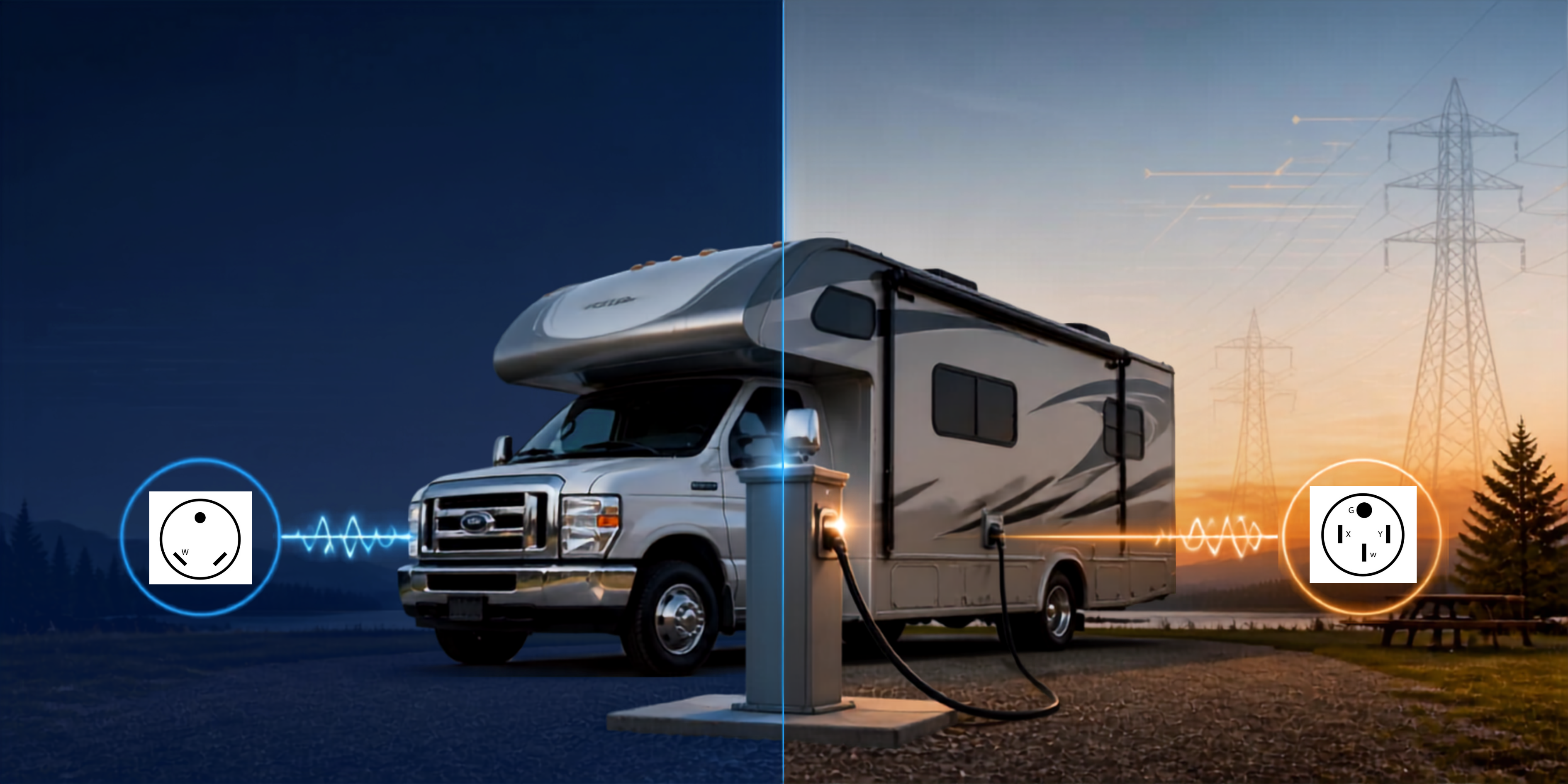
If you're new to RVing, one of the first questions you'll likely ask is: Does an RV run on 110 volts or 220 volts? The answer depends on the type of RV and the electrical service it uses. Most RVs are designed for either 30-amp or 50-amp shore power, and each configuration provides power differently.
Understanding RV Power
The majority of RVs fall into one of two categories:
-
30-amp RVs
-
50-amp RVs
Some smaller campers, such as lightweight trailers or truck campers, may only require a standard 15-amp household connection.
30-Amp RV Power: 110V
A 30-amp RV uses a NEMA TT-30 plug and operates on 110–120 volts AC. This connection contains:
-
One hot wire
-
One neutral wire
-
One ground wire
Because there is only one hot leg, the RV receives approximately 120 volts, making it suitable for running common RV appliances such as lighting, a microwave, refrigerator, and a single air conditioner.
Likewise, many small 15-amp campers simply plug into a standard household outlet and also operate on approximately 120 volts.
50-Amp RV Power: Both 110V and 220V
A 50-amp RV uses a NEMA 14-50 plug, which contains:
-
Two hot wires
-
One neutral wire
-
One ground wire
This configuration allows the RV to supply 120 volts to standard branch circuits while also making 240 volts available between the two hot legs when required by certain equipment.
In larger RVs, this additional capacity serves two important purposes:
-
Some appliances, such as certain air conditioning systems or electric ovens, may utilize the 240-volt capability.
-
The two hot legs also split the electrical load throughout the RV, allowing multiple appliances to operate simultaneously without overloading a single circuit. For example, one side of the RV may be powered by one hot leg while the opposite side is powered by the other.
This design provides significantly more available power than a 30-amp service, making it ideal for larger fifth wheels and motorhomes with multiple high-demand appliances.
Quick Comparison
| RV Service | Common Plug | Voltage | Typical Use |
|---|---|---|---|
| 15 Amp | Household Plug (NEMA 5-15) | 120V | Small campers and pop-up trailers |
| 30 Amp | NEMA TT-30 | 120V | Most travel trailers and mid-size RVs |
| 50 Amp | NEMA 14-50 | 120V circuits with 240V available between hot legs | Large travel trailers, fifth wheels, and motorhomes |
Frequently Asked Questions
Is RV power 110V or 220V?
It depends on the RV. A 30-amp RV operates on approximately 120 volts, while a 50-amp RV has two 120-volt hot legs that can provide 240 volts between them when needed.
Does a 50-amp RV use both 120V and 240V?
Yes. A 50-amp RV service supplies two separate 120-volt legs and a neutral. Most RV appliances operate on 120 volts, while some larger equipment may utilize the available 240-volt power.
What voltage does a 30-amp RV use?
A 30-amp RV uses a single 120-volt hot leg through a NEMA TT-30 connection.
Can I plug a 30-amp or 50-amp RV into household power?
Yes, with the proper adapter. Small campers and many 30-amp RVs can often be connected to a standard household outlet using the appropriate adapter, although the available power will be limited. A 50-amp RV can also be connected with the correct adapter, but you will need to manage electrical usage to avoid tripping the household circuit breaker.
Conclusion
Knowing whether your RV uses 120 volts or both 120/240 volts is important when selecting power cords, adapters, and campground hookups. In general, 30-amp RVs operate on 120 volts, while 50-amp RVs use a NEMA 14-50 connection that provides two 120-volt hot legs and makes 240 volts available when required.
Whether you're preparing for your first camping trip or replacing an RV power adapter, understanding your RV's electrical system helps ensure safe and reliable power wherever your travels take you. AC WORKS® offers a wide selection of RV adapters, extension cords, and power solutions designed to help you connect with confidence.
Watch our video:

Share:
Why Our Warning Labels Matter
Thank You for Celebrating 10 Years with AC WORKS®!