


Safety First: Why Our Warning Labels Matter
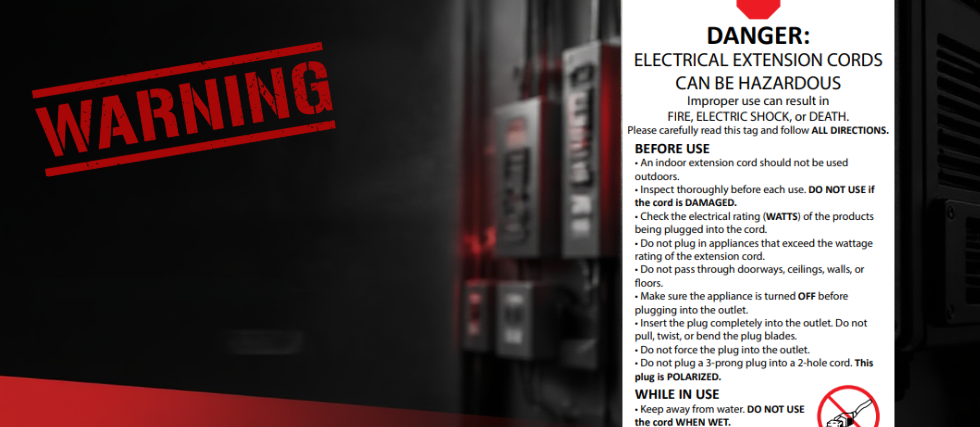
Extension cords make power more convenient—but used the wrong way, they can become dangerous. On AC WORKS products, the warning label is there to help you prevent the risks that matter most: fire, electric shock, or even death.
Below is a clear, practical guide based on the instructions printed on our labels, so you know exactly what to check before use, what to avoid while in use, and how to wrap things up after use.
Warning Labels Are Part of a Safety-First Customer Experience
At AC WORKS, safety isn’t an afterthought—it’s built into the product and the experience of using it. Our warning labels are designed to be easy to spot, easy to scan, and clear about what can go wrong if a cord is used improperly.
They also support responsible use by putting critical reminders right where you need them: on the cord itself. That means you don’t have to search for instructions when you’re in the middle of a job.
|
Important: The label includes a clear notice: “Do not remove this label.” Keeping the label on the product helps ensure the safety guidance stays with the cord for its full life. |
Before Use: Set Yourself Up for Safe Power
Most cord-related problems are preventable—if you start with the basics. The label calls out the key checks to make before you plug in.
-
Use the cord in the right environment — An indoor cord should NOT be used outdoors. If the product’s purpose is for outdoor use, you can assume it’s designed for weather exposure. However, the copper conductor/contact section must remain dry during use and should not be exposed to water, moisture or standing water.
-
Inspect every time — Check the cord thoroughly before each use. Do not use it if the cord is damaged.
-
Check wattage ratings — Verify the electrical rating (watts) of the products you plan to plug in, and do not exceed the cord’s wattage rating.
-
Prevent pinches and hidden damage — Do not pass the cord through doorways, ceilings, walls, or floors.
-
Start with devices OFF — Make sure the appliance is turned off before plugging into the outlet.
-
Plug in correctly — Insert the plug completely into the outlet. Don’t pull or bend the plug blades, and don’t force the plug into the outlet.
-
Respect polarized and grounded designs — NEVER plug a 3‑prong plug into a 2‑hole outlet. Do not misuse polarized plugs.
While in Use: Avoid the Most Common Real-World Hazards
Once the cord is energized, small mistakes can turn into big problems. The label focuses on the most common hazards customers run into at home, in garages, and on job sites.
-
Keep cords away from water — Do not use the cord when wet.
-
Keep kids and pets away — Eliminate pulling, chewing, tripping, and accidental unplugging.
-
Don’t daisy-chain cords — Do not connect multiple extension cords together.
-
Prevent overheating — Fully unwind the cord and do not cover it.
-
Protect it from damage — Do not drag the cord or place heavy objects on it.
-
Keep it out of walking traffic — Do not walk on the cord.
|
Overheating risk reminder: Coiled or covered cords can build heat during use. The label’s guidance is simple: fully unwind and do not cover. |
After Use: Shut Down Safely and Store It Right
Safe use doesn’t end when the job is done. A few seconds of proper shutdown and storage can prevent future damage and reduce risk the next time you reach for the cord.
-
Unplug the right way — Grip the plug, not the cord, when unplugging.
-
Store indoors — Always store the cord indoors.
-
Unplug when not in use — Don’t leave cords energized unnecessarily.
Clear Guidance for More Customers
You’ll also notice our warning labels are provided in both English and French to help more customers follow the same safety guidance with confidence. And because the label is a key part of safe operation, it includes a prominent reminder: Do not remove this label.
Conclusion: A Small Label That Makes a Big Difference
Warning labels exist for one reason: to keep you safe while getting the performance you expect from your AC WORKS products. Follow the steps for before use, while in use, and after use every time to reduce the risk of fire, electric shock, or worse.
Call to action: Take a moment today to read the label on your extension cord, share these reminders with anyone who uses it, and if you ever see damage or misuse risk—stop and replace the cord before powering up again.

Share:
10-Year Anniversary 🎉 T-Shirt Giveaway!
Is RV Power 110V or 220V?