

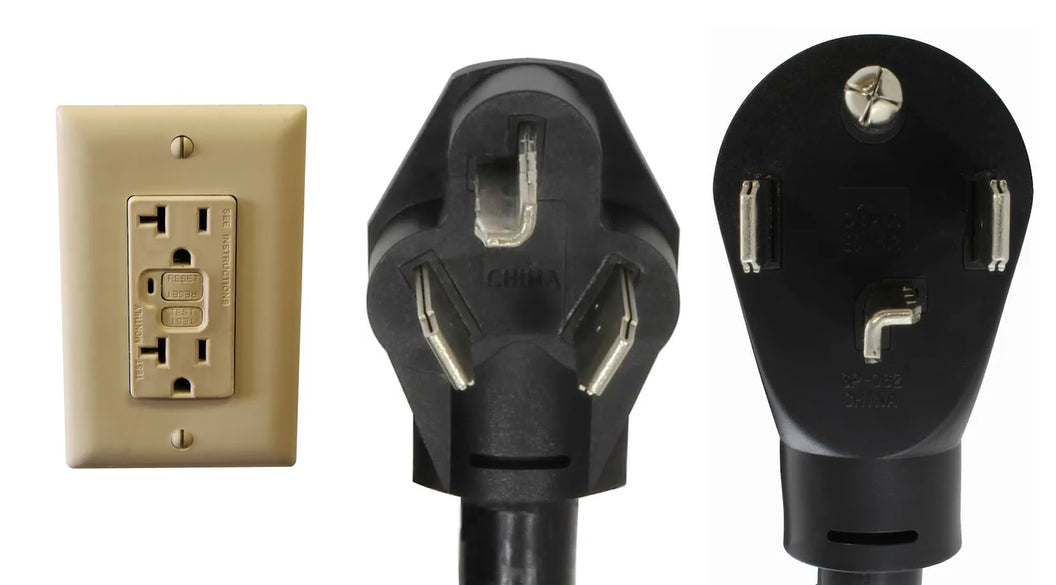
Lately, a lot of customers have been wondering if it is possible to adapt a 3 or 4 prong dryer to a regular household connection. While this is not possible, you can still adapt to other outlets around the house. But first, let’s go over why it's not possible. When your dryer has a 3 or 4 prong plug, or in technical terms NEMA 10-30P or NEMA 14-30P, it is because it requires 220 volts and 30 amps to function properly.
This means it cannot function with just 110 volts and 15 to 20 amps that you would get from a regular household outlet. Only gas-operated dryers operate with 110 volts at 15 to 20 amps, and those would already come with just the standard household plug. A regular household outlet is tiny compared to a 3 or 4 prong dryer plug. The cords associated with dryers are also much thicker than household cords.
Another way to think of it would be to compare motor sizes. You can’t possibly have your car run using the motor from a leaf blower. Your car needs a car engine. If you don’t have a NEMA 10-30 or NEMA 14-30 outlet available for your dryer, there are other outlets in your home that you can still use that will provide the 220 volts you need.
The first is a NEMA 14-50 outlet. These are typically used for electric cooking ranges. Another is NEMA 10-50. These have been used in the past for welders, dryers, and cooking ranges too. If you are a welder, you may also have a NEMA 6-50 outlet around. This can also provide the 220 volts you need to power your dryer.
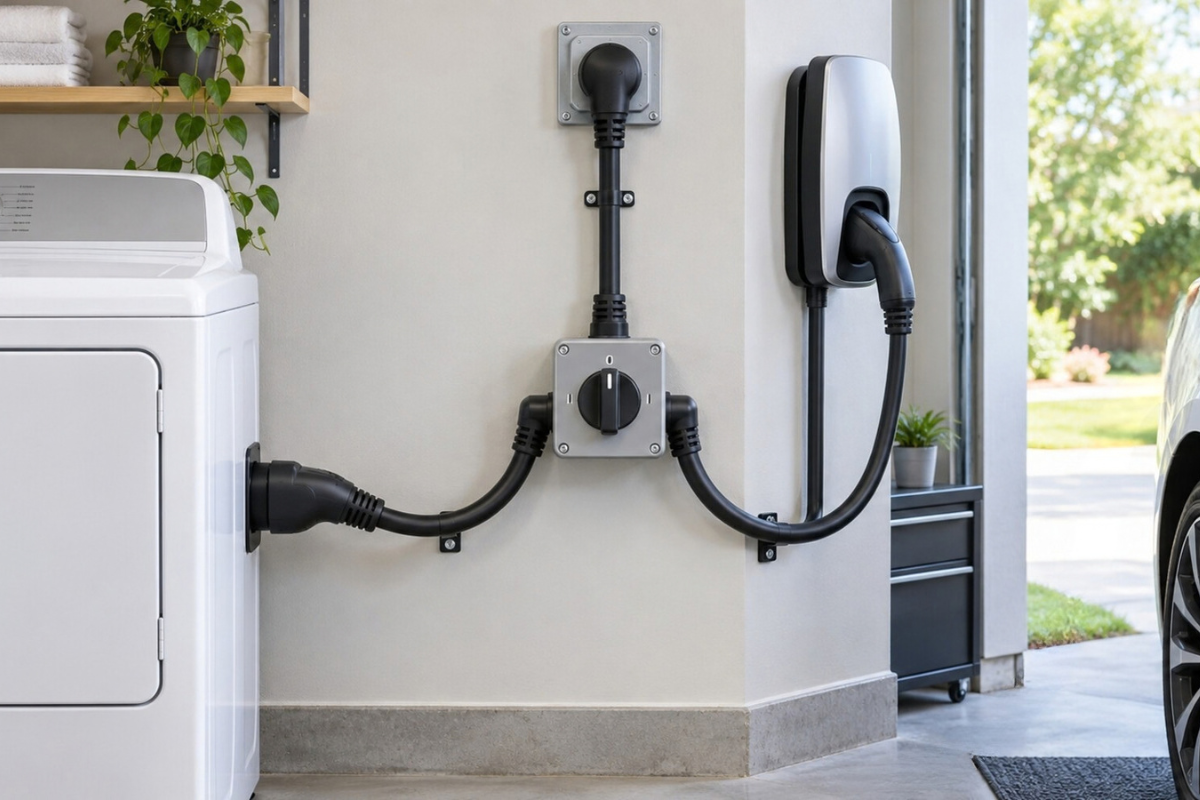
We offer adapters for all of these outlets to your dryer. If you don’t have these options available to you, then we recommend you contact a local electrician to have the proper outlet installed for you. If you have any questions about other specific outlets or plugs, please leave us a comment down below. Otherwise, be sure to give us a like and subscribe to see more content like this. Thank you for watching!
AC Connectors strives to provide power solutions to its customers since its founding in 2015. From our headquarters (Oak Creek Wisconsin, USA), we provide solutions worldwide and work efficiently to ship our AC WORKS® brand products out quickly, especially to those struck by natural disasters.

Share:
CarGenerator™ with AC WORKS® Inlet Adapters
Download Issue 4 of the WRAP UP Newsletter