


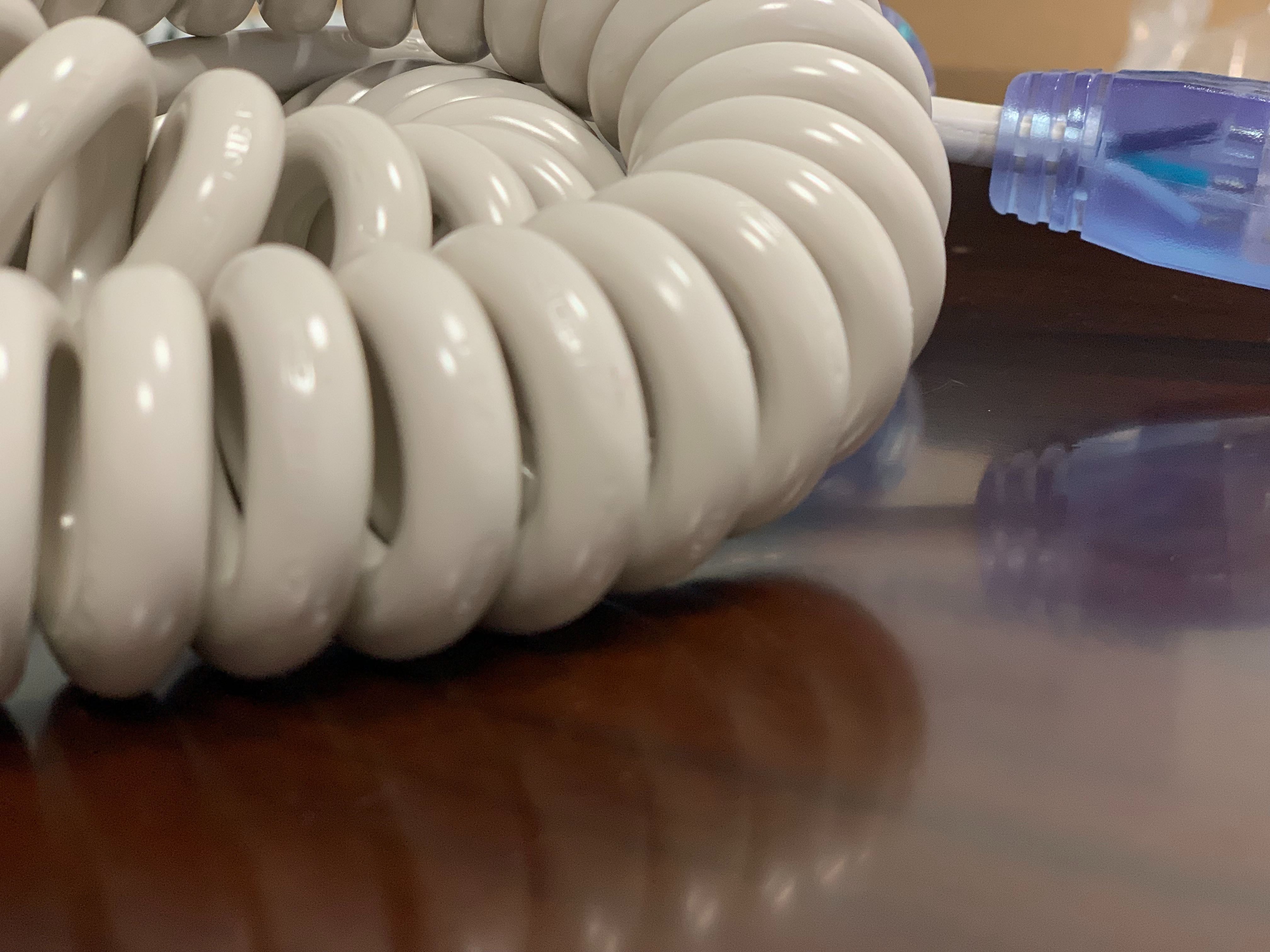

Coiled cords are shaped like a spring, but the design is not just for looks. These cords extend and retract. This allows the cord to go further and still use less valuable storage space when not in use. When you are using them, you can stretch them to more than twice their length and when you are done, they retract on their own making your clean up that much easier. There is no extra stress placed on the cord when stretched because of the coiled design.
AC WORKS® brand coiled cords are high quality and durable. Our cords will not break, flip, or tangle and will remain as designed with frequent use. It is common to see coiled cords used with as phone cords however there is no limit to where they will become convenient options. Many of our medical and hospital customers use our coiled cords for clean and convenient workspaces.

Our coiled cords are made of SJTW, 18/3, 16/3, hospital grade cord complying to green dot standards meaning if the cords are used within patient vicinity, they are conforming to UL standards and plug requirements. We can help you with cords of any style, gauge, diameter, jacket material and more. The coiled cords are commonly used in industries like telecommunications, medical, and military.
Coiled cords are straight cords with bent portions incorporated during the design process to help keep the durability and quality during frequent stretching and retracting. The cord will retract like a spring when pulled and let go.
Coiled cords have advantages over the straight cord. Straight cords need to be wound into a coil and placed or hung near the equipment being powered. They are not meant to be twisted, pulled, and bent meaning their lifespan will be shorter because they are constantly wound after use. The cord can also become a problem when trying to reach. It can become tangled and a safety hazard as it doesn’t have the flexibility to coil itself back up when let go for any reason.


Share:
Swimming Pool Pump Power
RSNA Registration Is Now Open