

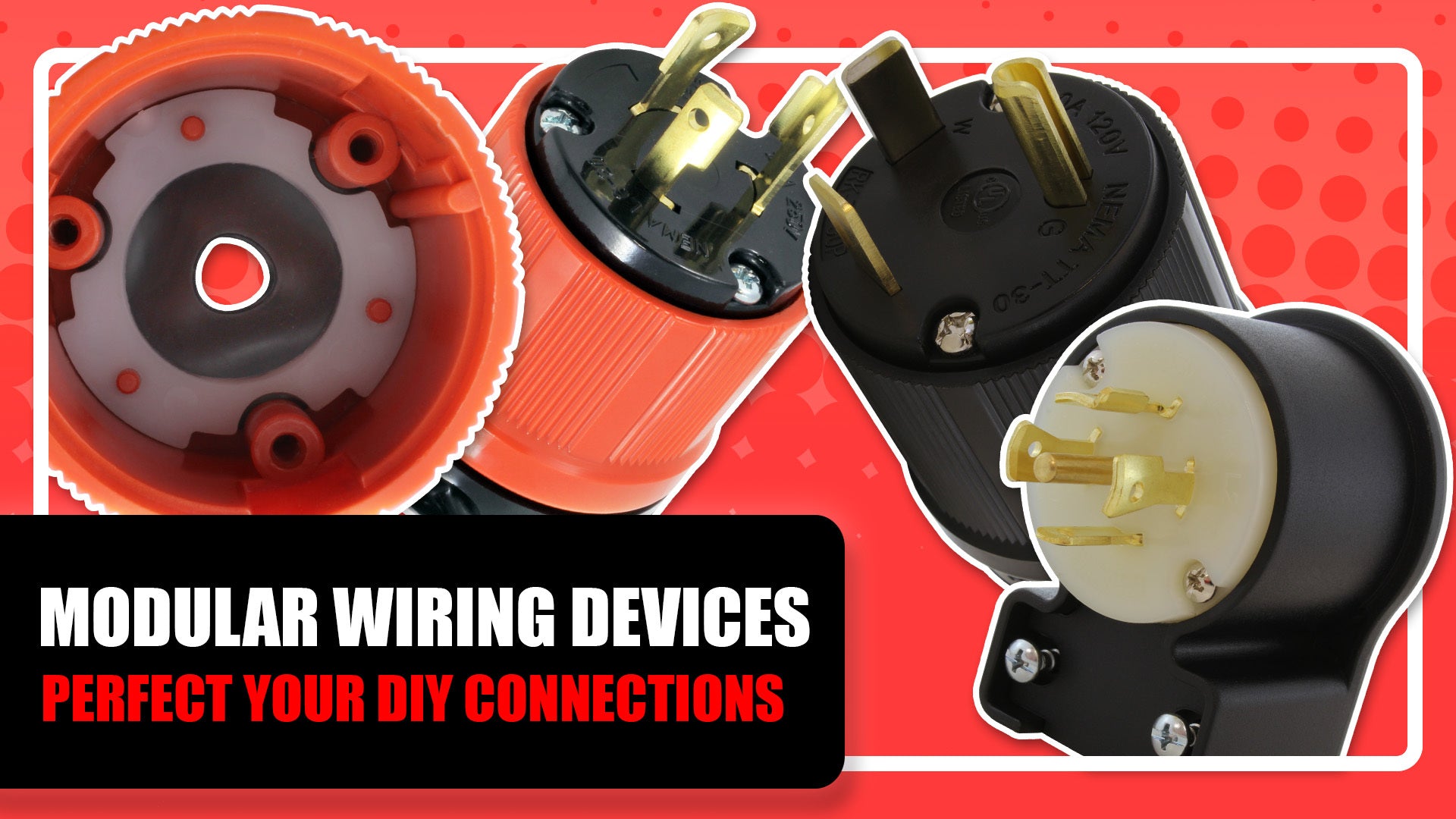
We deal with large businesses who buy in bulk, electricians, and of course “do it yourselfers” looking to learn a new skill. If you fall into that last category, this short video is for you.
When you receive one of our wiring device plugs or connectors, it will come with wiring instructions. Those specify which wire goes where and how much wire jacket to remove. We won’t go into too much detail since each plug and connector can be different, but the general idea is to make sure ground meets ground, neutral meets neutral, and hot meets hot. Again, some plugs and connectors can be a little more complicated than that, and the included instructions will go over those.
Something that often goes overlooked is reconnecting the plug or connector end to the case. If it is a straight body style, there will be a little notch on the inside of the case. You need to make sure the plug or connector lines up with that so it fits snug in the case. It will be impossible to close up the plug and connector assembly if you don’t line these up.
For our elbow style connections, you just need to make sure the screws line up with their sockets. These elbow style connections allow you to assemble these wiring devices in any angle that works for your situation.
Overall, connecting the case it’s much simpler than you think. Hopefully this video above helps you with your DIY adventures.


Share:
Power Input vs Power Output (Inlet vs Outlet)
Finding the Right Power Adapter on ACWORKS.COM