


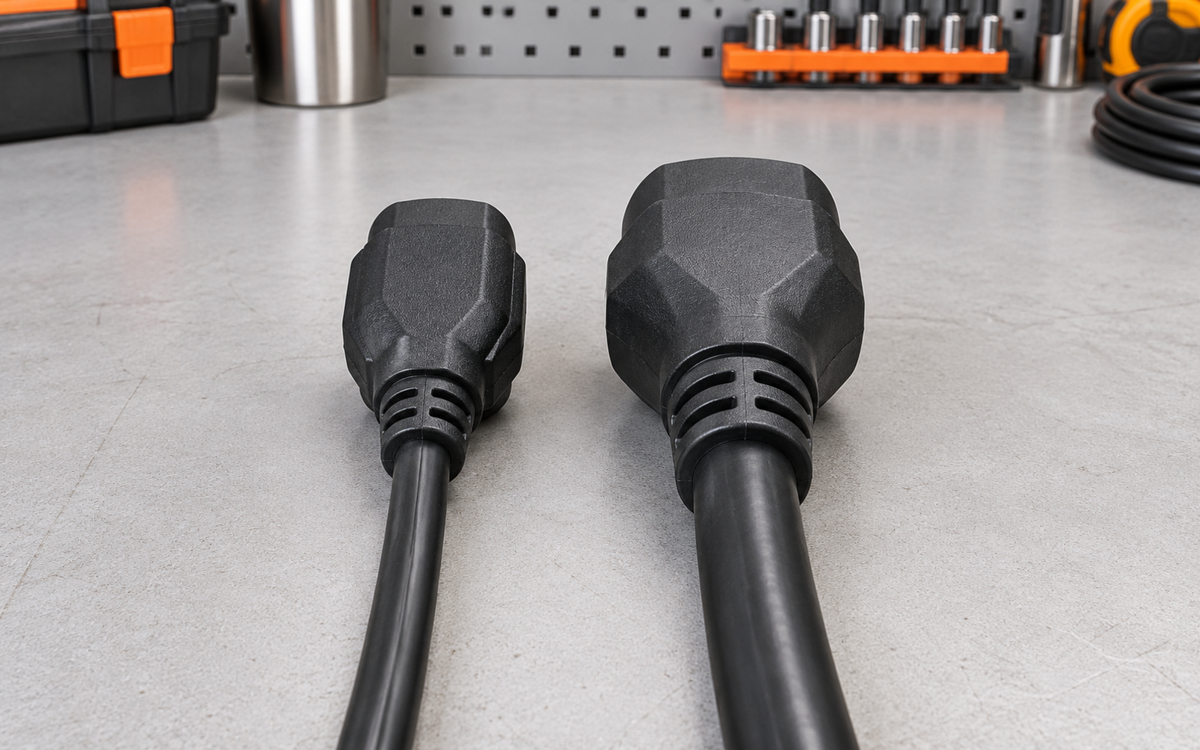
The fastest way to tell a NEMA 6-15 plug from a NEMA 6-30 plug is to compare the amperage rating, overall size, and cable gauge. Both are 250-volt, three-prong configurations with two hot connections and a ground, but the NEMA 6-15 is rated for 15 amps while the larger NEMA 6-30 is rated for 30 amps.
NEMA 6-15 vs. NEMA 6-30: Quick Comparison
- NEMA 6-15: 15 amps, 250 volts, two hots and a ground, approximately the size of a standard household plug, and associated with 14-gauge wire in the source transcript.
- NEMA 6-30: 30 amps, 250 volts, two hots and a ground, approximately palm-sized, and associated with larger 10-gauge wire in the source transcript.
- What they share: Both are 250-volt, three-prong configurations, which is why they can look similar at first glance.
How to Tell a NEMA 6-15 From a NEMA 6-30
Use several clues together instead of relying on appearance alone.
- Orient the plug with the ground on top. This makes the side-by-side comparison easier.
- Compare the overall size. A NEMA 6-15 is about the size of a standard household plug, while a NEMA 6-30 is closer to the size of your palm.
- Check the cable thickness. The transcript associates the 15-amp plug with 14-gauge wire and the 30-amp plug with larger 10-gauge wire.
- Confirm the rating. The NEMA 6-15 is 15 amp; the NEMA 6-30 is 30 amp. Both are rated for 250 volts.
Why the Two Plugs Can Be Confusing
With the ground positioned on top, these plugs can look almost identical. Their shared 250-volt, two-hot-and-ground layout adds to the resemblance. The clearest differences in the transcript are the amperage rating, physical scale, and the wire gauge associated with each plug.
The practical takeaway is simple: do not identify either connection by shape or size alone. Confirm the NEMA designation and electrical rating before selecting a cord, adapter, or power connection.
AC WORKS® Resources for Identifying Connections
For more help identifying compatible connection types, review the AC WORKS® NEMA 6-15 outlet solutions page, browse the NEMA 6-30 collection, or follow the AC WORKS® guide to finding the right power adapter.
When to Call a Licensed Electrician
Use a licensed electrician when a plug or receptacle is unlabeled, damaged, or difficult to identify, or when installation, rewiring, or circuit changes are required. Do not alter a plug or receptacle to force a connection. Always keep equipment disconnected while inspecting it.
Frequently Asked Questions
What is the main difference between NEMA 6-15 and NEMA 6-30?
The main difference is current rating: NEMA 6-15 is rated for 15 amps, while NEMA 6-30 is rated for 30 amps. The NEMA 6-30 is also physically larger and is associated with heavier wire in the transcript.
Are NEMA 6-15 and NEMA 6-30 both 250-volt plugs?
Yes. The transcript identifies both as 250-volt configurations with two hot connections and a ground.
What wire gauges are associated with NEMA 6-15 and NEMA 6-30?
The transcript associates NEMA 6-15 with 14-gauge wire and NEMA 6-30 with larger 10-gauge wire.
Can I identify these plugs by size alone?
No. Size is a helpful clue, but confirm the NEMA designation and rating. The NEMA 6-15 is roughly household-plug sized, while the NEMA 6-30 is closer to palm-sized.
When should I ask a licensed electrician for help?
Ask a licensed electrician when markings are unclear, equipment is damaged, or any installation, rewiring, or circuit change is needed.
Share:
Can a NEMA 5-15 Plug Handle 20 Amps? What AC WORKS® Users Need to Know
U-Shaped vs. Round Ground Pins: Are They Compatible?